
Few bagged salads in supermarkets: here’s why this is unlikely to be an isolated incident
Fresh-cut and ready-to-eat products are used by 85 per cent of households, with a consumer value of 1.2 billion. Unione Italiana Food: a common strategy is needed for the entire supply chain

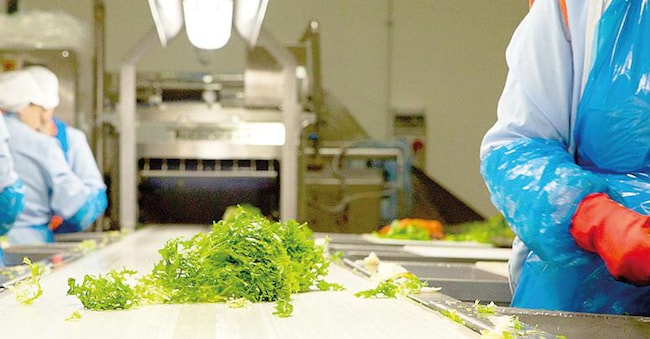
In many supermarkets, alongside signs indicating a reduced selection in the fresh produce section ‘due to weather conditions’, there are now empty spaces on the shelves where bagged salads and ready-to-cook vegetables – the so-called “Fourth and Fifth Range”, products used by 85 per cent of households, with a consumer value of around 1.2 billion.
The Unione Italiana Food has confirmed a reduction in supply of up to 30–40 per cent and, for the most severely damaged crops, yield losses of around 10–20 per cent due to stricter sorting and production waste. The problems – which began in July but have now reached a critical stage – concern ‘in particular chicory, endives, lettuces and spinach, but also valerian, baby lettuces, rocket and cabbages’. And for some crops, ‘the situation could worsen in the coming weeks’.
The causes? High temperatures and drought, irregular water supply and extreme weather events which are simultaneously affecting numerous Italian and European production areas. The crisis is further exacerbated by rising costs for energy, packaging and transport.
The warning has been reiterated by Confagricoltura: “Losses are also occurring because there is a shortage of crop protection products. Farming businesses are complaining about the limited availability of plant protection products and the consequent need to resort to costly solutions and, in some cases, to leave land fallow,” explains a statement. “This is yet another situation that highlights the need to introduce the assisted evolution techniques’.
“It is no longer just a seasonal issue, but a structural problem,” says Simone Zerbinati, chairman of the UIF’s Fresh and Processed Fruit and Vegetable Products Group – “Our companies are doing everything possible to ensure continuity of supply and high quality standards, but we must acknowledge a situation that is profoundly different from the past. The products most affected are those grown outdoors, which take between 35 and 55 days to mature; we therefore expect the shortage to last at least throughout September. This crisis must be tackled by the entire supply chain, which should promptly share information on critical issues, improve the planning of supplies, optimise transport and adapt supply to actual agricultural availability’.


