
Azerbaijan, nestled between the Caspian Sea and the Greater Caucasus, in search of ancient traditions and mud volcanoes
A journey back to prehistory in Gobustan

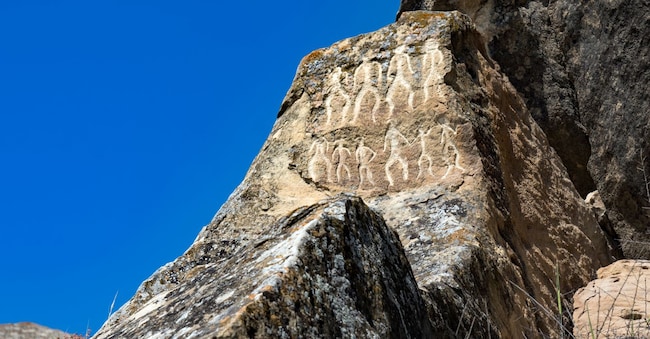
Leaving the capital and travelling south for about an hour along the coastal road, the landscape takes on an almost lunar appearance as you enter the Gobustan National Park. This archaeological reserve protects over 6,000 rock carvings that bear witness to millennia of human history, featuring depictions of hunters, boats, animals and ritual dances. Hidden amongst the rocks is also a Latin inscription left by a Roman legion in the 1st century AD – the earliest documented evidence of Rome’s presence this far east – and the ‘gaval dash’, a flat stone which, when struck, emits a metallic sound similar to a drum. The Gobustan experience is rounded off by a visit to the nearby mud volcanoes. Azerbaijan is home to almost half of the world’s active mud volcanoes; to visit them, it is advisable to use local guides with 4x4 vehicles, capable of navigating the dirt tracks leading to these curious clay hills, which are in a state of perpetual, silent bubbling.

