
Adriatic Lng in the final rush to increase capacity
By the end of the year, work to increase the terminal's capacity will be completed. Balena: 'Our challenge is to guarantee the country a constant flow of energy'
Key points
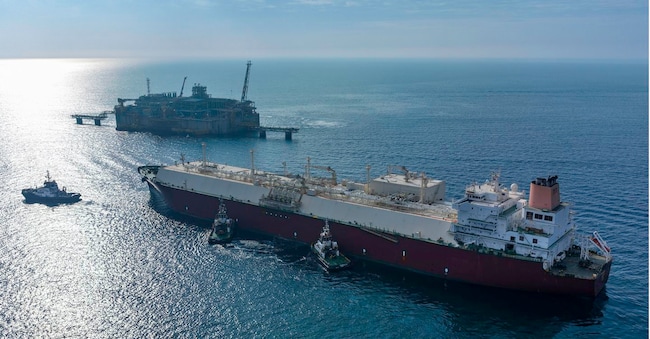
Adriatic LNG, the company that manages Italy's largest regasification terminal, located off the coast of Porto Viro, in the province of Rovigo, aims to conclude by the end of the year the work needed to increase regasification capacity, already allocated for the next 20 years, from 9 to 9.5 billion cubic metres per year on a constant basis, which will be available from the first quarter of 2026. And in the meantime, the company chaired by Massimo Derchi and led by Alexandra Thomas has started up the engines to offer the market the regasification capacity available in the period between January 2029 and December 2050, with operators who can apply, by next Friday, to be accredited to participate in the binding phase starting on 17 September and closing on 3 October.
Balena: the challenge is to continue to provide the country with a steady flow of energy
Un doppio snodo che conferma il ruolo sempre più strategico del terminale per la sicurezza energetica tanto più alla luce del mutato scenario geopolitico che costringe l’Europa, Italia inclusa, ad accelerare i piani per diversificare le fonti di approvvigionamento nell’ambito dei quali sta via via aumentando il peso del Gnl (il gas naturale liquefatto) e l’apporto assicurato da infrastrutture come il rigassificatore di Rovigo. «La nostra sfida è quella di continuare a garantire al Paese un flusso costante di energia, mantenendo l’elevata affidabilità che da sempre caratterizza il nostro impianto - spiega a Il Sole 24 Ore il direttore delle Relazioni esterne di Adriatic Lng, Alfredo Balena -. In questo percorso, l’aumento di capacità da 9 a 9,5 miliardi di metri cubi annui costanti ci permetterà di gestire con maggiore flessibilità un’infrastruttura che, ricordiamo, già oggi vanta uno dei tassi di utilizzo più alti a livello europeo e che ha allocato tutta la capacità disponibile fino al
The third largest source of gas imports
Con una capacità di rigassificazione massima autorizzata di 10,4 miliardi di metri cubi annui, corrispondenti a circa il 15% dell’attuale domanda nazionale di gas - di cui 9,5 miliardi di metri cubi l’anno di capacità costante e 900 milioni di metri cubi annui di capacità non costante -, Adriatic Lng costituisce al momento la terza fonte di ingresso per le importazioni di gas dopo i gasdotti provenienti da Algeria e Azerbaijan, come documentano anche i dati del primo semestre, secondo i quali i volumi rigassificati e immessi in rete dal terminale hanno rappresentato il 44% delle importazioni nazionali di Gnl (circa 10,3 miliardi, +35% circa rispetto al semestre dell’anno precedente), mentre sono state 39 le navi metaniere accolte e provenienti da Stati Uniti e Qatar (1.170, invece, quelle approdate a Rovigo dall’avvio delle attività operative nel 2009 a oggi con 105 miliardi di metri cubi di gas immesso complessivamente nella rete nazionale di trasporto del gas).
Manager: terminal an essential pillar of energy security
"We can therefore look to the future with confidence," continued Balena, "on the strength of operating results that year after year bear witness to the excellence of our terminal, as well as the increasingly central role that LNG is playing, today an essential pillar for national and European energy security. A framework that therefore sees the contribution of Adriatic Lng as even more strategic: the open season that we launched a few days ago is part of this direction, which makes regasification capacity available to the market until 2050, for a total of 140 billion cubic metres".
The open season schedule
According to the roadmap formulated by Adriatic Lng, 38 165,000 cubic metre landfill slots will be made available to the market from 2029 to 2034, while for the following years, from 2035 to 2050, the available regasification capacity will be offered in the form of volume for periods of a fixed duration (16, 10 or 5 continuous years starting from 2035) with the constraint for potential interested parties to request a minimum of 1 billion cubic metres per year over the period offered in the various sessions.


