Judgment

The Agnelli-Arrivabene case: the European Court of Justice redefines the boundaries of sports justice – sanctions must be open to review by an independent judge

The decision stems from the legal dispute involving former Juventus chairman Andrea Agnelli and former chief executive Maurizio Arrivabene as part of the investigation into capital gains

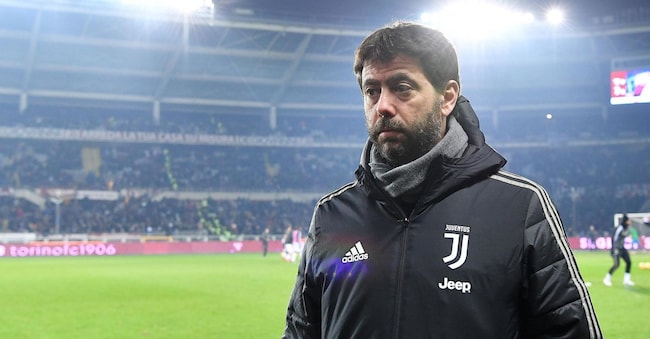
 Andrea Agnelli  ANSA

4' min read

Translated by AI
Versione italiana

4' min read

Translated by AI
Versione italiana

The autonomy of sports justice has been reaffirmed, but is no longer sacrosanct. The Court of Justice of the European Union has in fact handed down a judgement set to have a profound impact on the balance between the sporting system and European law, ruling that disciplinary sanctions imposed by sports federations and bodies must be subject to review by an independent court with the power to set them aside and, where necessary, to adopt interim measures.

The capital gains case

The ruling stems from the dispute involving the former president of Juventus Andrea Agnelli and the former chief executive Maurizio Arrivabene as part of the investigation into capital gains. A case which, having started as an internal disciplinary matter within Italian football, has evolved into a European case capable of calling into question some of the cornerstones of the current sports justice system.

Loading...

As the Court itself points out, on 1 April 2022, the FIGC Federal Prosecutor’s Office initiated disciplinary proceedings against several clubs, including Juventus, and a number of executives accused of participating in a scheme involving fictitious capital gains aimed at artificially inflating the book value of players.

Subsequently, the two Juventus executives were banned from carrying out any activities within the Italian football federation; these sanctions were later extended to the global level by FIFA and upheld by the Italian sports justice authorities.

The legal issue arises when the case comes before the Italian administrative court.

Under the current legal framework, the latter may award compensation for damages but does not have the power to set aside final sporting sanctions. Hence the request for a preliminary ruling to the Court in Luxembourg to ascertain whether the Italian system is compatible with the fundamental freedoms guaranteed by the European Treaties and with the right to effective judicial protection.

The EU Court’s ruling

The Court’s response is detailed but extremely clear. Firstly, the European judges note that a sanction which prevents a manager from carrying out their professional activities in all Member States constitutes a restriction on the freedoms of movement and the freedom to provide services enshrined in EU law. However, this does not amount to an automatic rejection. A restriction may, in fact, be legitimate if it pursues an objective in the general interest and complies with the principle of proportionality.

In this respect, the Court implicitly recognises the importance of the objectives pursued by the FIGC.

Compliance with clubs’ financial and accounting rules is regarded as an essential factor in ensuring the proper conduct of sporting competitions and is therefore a legitimate interest worthy of protection. It will, however, be for the national court to determine whether the sanctions are in fact proportionate to the objectives pursued.

The parameters

The Court in Luxembourg also sets out the criteria to be followed. Temporary bans on practising a profession must form part of a coherent system designed to punish offences and prevent reoffending.

Furthermore, sanctions must be determined on the basis of transparent, objective and non-discriminatory criteria. In other words, the discretion exercised by disciplinary bodies must be accompanied by precise and verifiable procedural safeguards.

However, it is the second part of the judgment that is likely to have the greatest impact. According to the Court, any individual subject to a sanction that affects rights recognised under European law must be able to benefit from an effective judicial remedy.

This means that there must be a court capable not only of assessing the lawfulness of the measure, but also of setting it aside and, where necessary, suspending its effects by means of interim measures.

The judge appointed to carry out this review must also meet strict criteria of independence, particularly with regard to the sports organisations concerned. The Court emphasises that its existence, composition and organisation must be laid down by law; the right to a defence, the right to be heard and effective review of the contested acts must be guaranteed.

However, a two-tier system of courts is not required. On this point, the Court refrains from commenting on the internal organisation of national legal systems: what matters is the existence of at least one court capable of ensuring full and effective protection.

The impact of the judgement

It will now be up to the Italian court to determine whether these conditions have been met, particularly with regard to the football disciplinary system and the role of CONI’s Collegio di Garanzia as the court of last resort.

The implications of the decision extend far beyond the Agnelli-Arrivabene case. At stake is not only the future of disciplinary sanctions in Italian football, but the very relationship between sporting autonomy and the European legal system.

In recent years, the Court of Justice has ruled on the rules of professional football on several occasions, from the case Super League to systems of federation governance, reaffirming that federations retain significant regulatory powers but cannot operate outside the fundamental principles of the Union.

For the FIGC, CONI and all the European federations, the message is clear: safeguarding the integrity of competitions remains a legitimate objective, and disciplinary sanctions continue to be an indispensable tool.

However, when these affect the professional activities of managers, athletes or those working in the sector, they must be accompanied by legal safeguards equivalent to those required in any other area of European law. This is a ruling that does not undermine sports justice, but rather redefines its boundaries. It could represent one of the most significant developments in recent years in the delicate balance between the governance of sport and the primacy of European law.

Copyright reserved ©

Brand connect

Loading...

Newsletter

Notizie e approfondimenti sugli avvenimenti politici, economici e finanziari.

Iscriviti

Tutto mercato WEB