
Agnes Prize, Gianni Letta: It's the Cassation of Journalism and Literature Awards
On air on 1 July in secon da sera on Rai1. Among the award-winners Fiorenza Sarzanini, Aldo Cazzullo, Carlo Conti, Francesca Fagnani and the TV mini-series "Il Conte di Montecristo"
5' min read
Key points
- Letta: it's the Cassation of journalistic and literary awards
- Rossi (ad Rai): Agnes prize reminds centrality of public service
- Marano, award remembers value of truthful information
- Letta on Simona Agnes: she should be able to serve as president
- Firerenza Sarzanini receives the Printed Paper Award
- Cultural Disclosure Award to Aldo Cazzullo
- For TV awarded Carlo Conti
- Transmission of the Year, award to Fagnani for Belve
- Fiction award to the miniseries "Il Conte di Montescristo"
- Fabio Marchese Ragona receives the Jubilee Award
5' min read
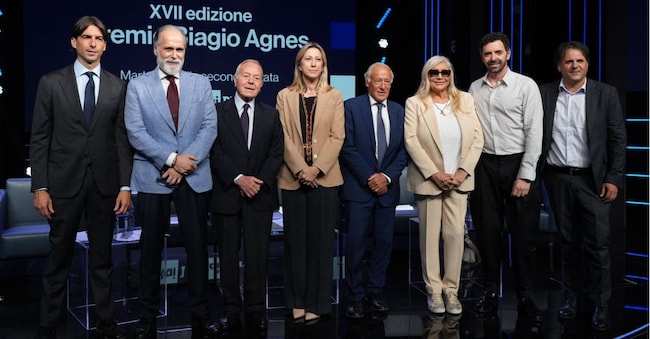
Passion and talent, rigour and seriousness, in reporting reality without conditioning, in a profession, that of journalist, which constitutes one of the cornerstones of democracy: these are the values that animate the "Biagio Agnes Prize - International Prize for Journalism, Information and Communication", whose 17th edition will take place on Friday 20 June for the first time in the magnificent and iconic setting of Piazza di Spagna in Rome. On stage, Mara Venier and Alberto Matano will present the award ceremony, broadcast on Tuesday 1 July in the late evening on Rai 1. The jury of the Agnes Award is made up of the president Gianni Letta and Giulio Anselmi, Alberto Barachini, Carlo Bartoli, Stefano Folli, Luciano Fontana, Luigi Gubitosi, Paolo Liguori, Pierluigi Magnaschi, Giuseppe Marra, Massimo Martinelli, Antonio Martusciello, Agnese Pini, Antonio Polito, Aurelio Regina, Giampaolo Rossi, Danda Santini, Marcello Sorgi, Fabio Tamburini, Mons. Dario Edoardo Viganò.
Letta: it's the Cassation of journalistic and literary awards
"Names of such a high level and recognised prestige that there is no need to illustrate who they are, nor to explain the reason for the award," stressed jury president Gianni Letta at a press conference in Via Asiago. 'This prize is the Cassation of journalistic and literary prizes,' Letta stressed. 'Agnes was a great manager and a legendary director general of RAI. I believe his main merit was that he gave everyone who worked in the company the pride and pride of belonging to RAI'.
Rossi (RAI ad): the Agnes prize recalls centrality of public service
"The Agnes Prize commemorates one of the most important figures in the world of Italian entrepreneurship and a great director general of RAI," emphasised Giampaolo Rossi, RAI's CEO, opening the presentation of the 17th edition of the Biagio Agnes Prize. The award, he added, 'helps us to relive the history of public service. To rethink a path in the history of Italian TV, culture, Rai and the central role it plays in innovation processes'. Agnes, Rossi recalled, 'was the managing director who faced the arrival of the duopoly and commercial TV. Today we too are facing a phase of change, almost parallel to that of the late 1980s. This award is meant to be a way of recalling the centrality of RAI, a true industrial hub that underpins the culture of our country'.
Marano, prize remembers value of truthful information
"Right now the concepts of dialogue and informing have a difficulty, which is that of reality. People think they know things because they have seen it on the platforms: this is the problem we are facing. This award certifies the truth: it reminds us of the journalistic value of information, because we are losing sight of what the truth is,' emphasises RAI board member and acting chairman Antonio Marano. The award must remind us of the seriousness of what we inform about and what we say. Informing has a value today that is more important than ever'.
Letta on Simona Agnes: she should be able to serve as president
During his speech at the presentation of the 17th prize, jury president Gianni Letta recalled that Simona Agnes, Biagio's daughter, nominated by the centre-right as RAI president, is carrying on her father's legacy. Then he added: 'She would do even better if she could carry out her functions without having to resort to an acting one'. The reference is to the complex game of ratifying the appointment of Simona Agnes by the RAI Vigilance Commission, on which for months there have been no openings from the oppositions, leading the majority to desert the sessions of the body convened to vote on the opinion on Agnes herself.


