
The wonders of nomadic Kyrgyzstan: amongst glaciers, valleys and yurts
The culture and spirituality of Osh along the Silk Road

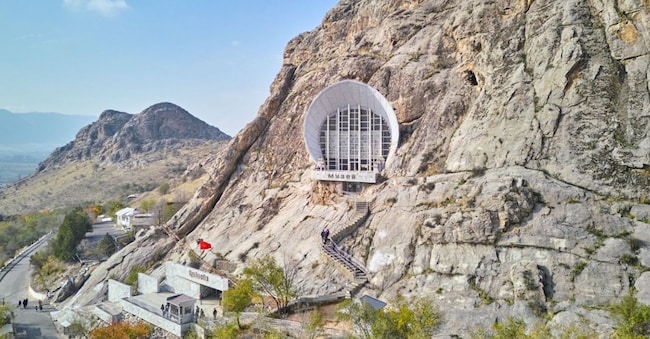
Setting off from the capital, Bishkek, you can choose to head straight for Osh, crossing the Too-Ashuu Pass. In this little town, you can still really feel the atmosphere that has always permeated the key hubs along the Silk Road, where peoples from China, Tajikistan and Uzbekistan exchanged languages, cultures and goods with the locals, and even compared their dietary habits: which is why in Osh you can sample lepeshka, a bread baked in a clay oven called a tandyr, made with butter, milk and cream added to the dough, and topped with sesame and cumin seeds. You can also savour maida manty – small dumplings filled with mashed potato and aromatic herbs, boiled in water and served with a chilli and garlic sauce. The shish kebek, skewers made up of various types of meat, are also well worth trying. This melting pot is also very evident at the Bazaar, where, alongside colourful pyramids of fruit and vegetables, adras and ikat fabrics are on display, along with ceramics and woodcarvings that have been brought here since the 8th century. The artisans are happy to show visitors around their workshops so they can watch them working with natural materials. And just as merchants have done for centuries upon centuries, tribute must be paid to Mount Sulaiman-Too, which dominates the horizon of Osh and the Fergana Valley, flanked by five peaks where there are countless caves, gorges and places of worship, all linked by a dense network of paths that pilgrims have always frequented to pray and tap into the energetic and spiritual vibrations emanating from this ancient landscape. The significance and power of this landscape can also be appreciated by visiting the Sulaiman Mountain Museum, carved out of the rock.

