
Altromercato returns to profit thanks to its focus on food products
Revenue of 50 million, compared with 34 in 2021, thanks to the revitalisation of the shops, increased customer loyalty and the use of strategies typical of the consumer goods sector, such as promotions

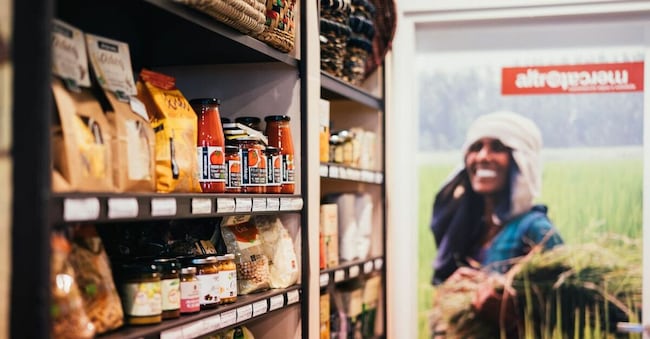
Altromercato’s ‘new deal’ is bearing fruit. Italia’s largest fair trade organisation (and the second largest in Europe) is set to close its 2025–26 financial year with €50 million in revenue, compared with 46.8 million in the previous financial year and 34 million in 2020–21. The latest financial statements confirm a return to profit and an increase in self-financing by the 80 members, demonstrating their confidence in the company and reinforcing its financial stability.
These results are the culmination of three years of major developments, including the reorganisation of the board of directors and the appointment of Marta Fracasso as chair and Fausto Zendron as chief executive. But above all, with the adoption of a bold business plan for 2023–26, involving the phasing out of certain product categories that Altromercato was unable to promote effectively (such as clothing, gifts and homeware) in order to focus on food and, to a lesser extent, natural cosmetics. And then there is the work on revitalising the 180 Botteghe del Mondo and on increasing brand awareness, which remains low compared to the organisation’s high reputation. Furthermore, the development of international markets, starting with countries considered most receptive to a value-driven offering, such as those in the Far East.
“Without compromising the values of fair trade, we have undergone a significant evolution in recent years that has led us to rethink our range so as to make it attractive in terms of both products and prices. We have also made use of strategies typical of the mass-market sector but less common in fair trade, such as promotions and advertising,” explains sales director Luigi Ranieri. A prime example is that of chocolate bars: whereas they used to cost between 50 and 80 per cent more than the premium product, the price difference has now fallen to 15–20 per cent. This price reduction has boosted sales and secured Altromercato’s position as the market leader in organic chocolate bars within the large-scale retail sector.
“This change in approach has enabled us to increase customer loyalty – which was already very high (the loyalty rate is over 30%) – and to attract new customers, driving growth across all the channels in which we operate: the 1,550 large-scale retail outlets and 2,000 specialist organic shops, school canteens, foodservice and vending, which we entered two years ago and where, in 2025, we served 7.2 million cups of coffee,” adds Ranieri. Even our ‘Botteghe del Mondo’ shops, after some difficult years, have bounced back and benefited from the extensive revamp we’ve carried out: the shops have been redesigned, the product ranges redefined and the displays made more attractive with the aim of appealing to a wider audience than in the past’.
Good results are also coming from the sale to major food manufacturers of fair trade ingredients and raw materials (primarily cocoa, coffee and sugar) sourced from 91 producer organisations in 37 countries, which account for 50 per cent of Altromercato’s revenue.
“Beyond the business value, for us, supplying food companies means fostering cultural enrichment,” emphasises Ranieri. “The fact that those who have always sought to minimise their purchase costs are now willing to pay a little more to buy fair trade raw materials from us and to help build ethical, direct, participatory, traceable and sustainable supply chains is a very positive sign.” Among the main partners in Italia is Esselunga, which not only buys fair-trade cocoa but also collaborates with Altromercato on its own chocolate range .

