
Archaeological goods, prize for recovering them only if the discovery is accidental
The willingness to unearth them excludes the possibility of receiving the contribution, usually one quarter to one tenth of the value of the find
by Filippo Di Mauro and Guglielmo Saporito
 Aggiungi Il Sole 24 Ore
ai preferiti su Google
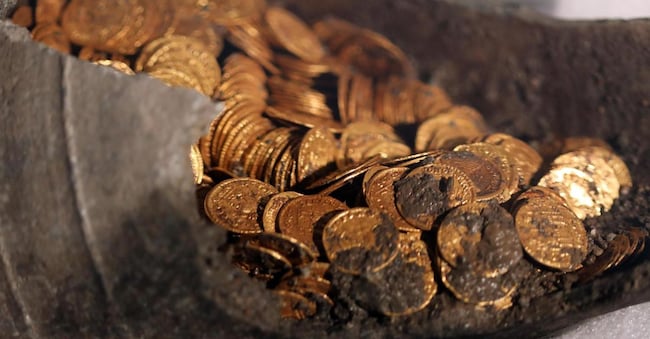
Trying your luck doesn't always pay off: this was realised by a diver from Porto Cervo, who found 30,000 Roman coins at a depth of about three metres. Although made of bronze, the discovery was of considerable value and could have yielded a finder's fee (usually a quarter to a tenth of the value). But nothing accrued to the diver, as the Ministry of Culture considered that the discovery was not accidental: the explorer had in fact used a metal-detector.
The orientation of the Ministry was confirmed by the Sardinian Regional Administrative Court (judgement 2/2026 of 5 January), which excluded the discovery award for two reasons: the discovery lacked the fortuitous character and, moreover, the discoverer had acted with an explicit intention to search.
Facts
As a matter of fact, the diver had brought with him, on board a boat, a metal detector, which he then actually used. This circumstance qualified the activity as being aimed at the discovery of cultural goods in an area, moreover, known for the presence of relicts of wrecked boats. The judgement observes, in particular, that if a person goes to the beach to look for the gold wedding ring he had lost the night before and, while searching for the wedding ring using a metal detector, he comes across an antique jewel, it is evident that the discovery is entirely accidental, even in the presence of the instrumentation (because one was not looking for archaeological goods). The same reasoning applies to the campaigns that are occasionally organised by environmental associations to clean the beaches of debris: it is true that metal detectors are often used to search for metal waste, but if an ancient metal object were to be found during one of these events, the discovery would be fortuitous. In other words, the metal detector can also be used for archaeological purposes, but not only for this, so that its use per se does not necessarily and automatically reveal an archaeological search.
Award also goes to those who 'discover' goods on the web
On the same theme of the relationship between technology and chance discoveries, we note the case of an archaeology enthusiast who on the Internet discovered the clandestine sale (in Australia) of a rare ancient vase stolen from a museum. Again, the discoverer asked for an award, which was recognised by the courts (Council of Justice, 532/2025), going beyond the territorial dimension of the discovery (the national territory). In fact, the person who 'finds' on the internet, even abroad, an asset that belongs to the state property was rewarded, because it is not necessary to have material contact with the archaeological object, but it is sufficient that the private individual has made a decisive contribution to the recovery. If, therefore, an enthusiast, in the course of normal surfing on the Internet, without the purpose of archaeological investigation, finds an object that belongs to the State and facilitates its recovery, the discovery is understood to be 'fortuitous, unforeseen and unplanned'. A discovery that, according to the judges, should be rewarded because it encourages aware defence and vigilance on cultural heritage.

