Consumption

How our shopping habits are changing: here are the 10 trends that emerge when you read the labels

The results of the 19th edition of the GS1 Immagino Observatory, which analyses a basket of products accounting for 82.7 per cent of total sales in 2025 across supermarkets, hypermarkets and self-service outlets, generating 57.3 billion in sales

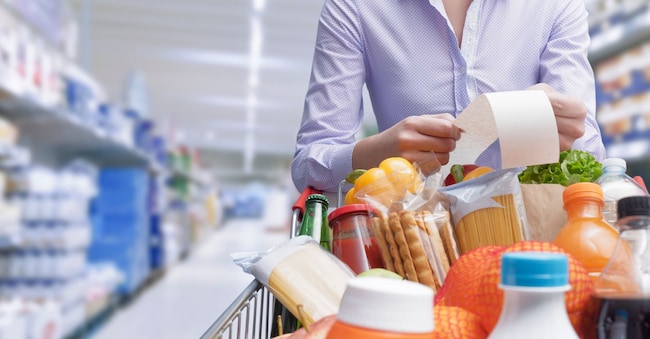
Woman pushing a cart and checking a grocery receipt, grocery shopping and expenses concept stokkete - stock.adobe.com

3' min read

Translated by AI
Versione italiana

3' min read

Translated by AI
Versione italiana

Every six months, GS1’s Immagino Observatory takes a snapshot of Italians’ spending over the previous 12 months, categorising it according to the messages and ‘claims’ featured on packaging, and highlighting the trends that characterise the interplay between changing consumer demand and the food industry’s supply, which, whilst catering to that demand, also exerts a significant influence on it.

In its 19th edition, the Observatory analysed the 2025 shopping basket, monitoring 151,203 products – including food, pet food, home care and personal care items – divided into ten themed shopping baskets. This extensive range of products accounts for 82.7 per cent of total sales in 2025 across supermarkets, hypermarkets and self-service outlets, generating €57.3 billion in sell-out revenue (+1.6 per cent compared with 2024).

Loading...

Here are the trends emerging from the 10 baskets analysed:

1. Italian identity endures

“Made in Italy”, PDO, PGI and regional designations on labels: the Observatory recorded 28,817 products with a sell-out value of €13.3 billion, showing an annual growth of 1.8 per cent by value but remaining essentially stable by volume.

2. The world of logos and certifications

A total of 11 ‘labels’ (such as EU Organic, Kosher, Fairtrade, Friend of the Sea and FSC) were identified, appearing on the labels of 26,569 products with a sell-out value of €10.5 billion and an annual growth rate of +1.2% by value and +1.1% by volume.

3. ‘Free from’ products are gaining ground...

Products that are ‘free from’ certain ingredients – such as gluten, lactose, sugars, GMOs or pesticides: the Observatory has identified 22,480 products with a sell-out value of 12.5 billion euros and an annual growth rate of +3.2 per cent by value and +1.4 per cent by volume.

4. ... and the rich-in

Foods with claims indicating the presence of at least one ‘beneficial’ ingredient or nutrient (such as fibre, lactic acid bacteria or protein) number 12,077 and, in 2025, generated €5.9 billion in sell-out sales, with an annual growth rate of +2.8 per cent by value and +2.0 per cent by volume.

5. The ‘super ingredients’

From matcha to wasabi, from mango to cashews, from ginger to chia seeds, from wheat germ to coconut water, 41 products and ingredients were identified across 15,585 products, with sell-out sales of over 5.7 billion euros and an annual growth rate of +5.3 per cent by value and +2.2 per cent by volume.

6. Quality and tradition

This is a basket comprising 6,867 products, all of which are characterised by claims such as ‘artisan’, ‘local’ or ‘handmade’. In 2025, sales exceeded 3.5 billion euros, with an annual growth rate of +2.6 per cent by value and +1.6 per cent by volume.

7. The lifestyle food section

Plant-based, vegetarian, vegan, alternative, substitute or vegetable-based: the Immagino Observatory has identified 5,776 products with a sell-out value of €3.1 billion and an annual growth rate of +3.1 per cent by value and +2.1 per cent by volume.

Loading...

8. Pet food

There are 4,056 products for dog and cat nutrition that fall under the ‘free-from’, ‘rich-in’, ‘Italian-style’ and ‘gluten-free’ trends, as well as within the realm of sustainability. In 2025, their sell-out value exceeded 1.2 billion euros, with an annual trend of -0.4% by value and stable by volume.

9. Personal care

The Immagino Observatory analysed the performance of 8,385 personal care products offering protection, hydration and regeneration benefits. In 2025, these products generated sell-out sales of €1.3 billion, with an annual growth rate of +1.5 per cent by value and +1.8 per cent by volume.

10. Eco-friendly cleaning

The Immagino Observatory has identified 2,596 environmentally friendly household cleaning products. In 2025, these generated over 817 million euros in sell-out sales, with an annual trend of -9.2 per cent by value and -7.8 per cent by volume.

“Alongside these findings,” GS1 notes – are complemented by the ‘Immagino’ meta-product, which measures changes in the nutritional value of the average Italian food shopping basket, and an in-depth analysis of on-pack communication regarding environmental and social sustainability and animal welfare, using the approach developed by the Institute of Management at the Scuola Superiore Sant’Anna in Pisa.”

“This new edition of the Immagino Observatory comes at a crucial moment when, thanks to artificial intelligence and agent-based shopping, a new chapter in ‘grocery shopping’ is unfolding. Now, standardised product information on labels – digitised, clear, comprehensive and shared – is no longer just a crucial channel of communication between the industry, retailers and consumers, but is also becoming the only way to guarantee the shopper’s ultimate satisfaction,” comments Bruno Aceto, CEO of GS1 Italy.

Copyright reserved ©
Loading...

Brand connect

Loading...

Newsletter

Notizie e approfondimenti sugli avvenimenti politici, economici e finanziari.

Iscriviti