
Artificial intelligence and food, how Unilever's Ai unveils restaurant trends
The experimental phase has started: by cross-referencing the data collected from online menus and wholesalers' orders, it is possible to understand in which direction demand is going and how to rationalise production costs

3' min read
3' min read
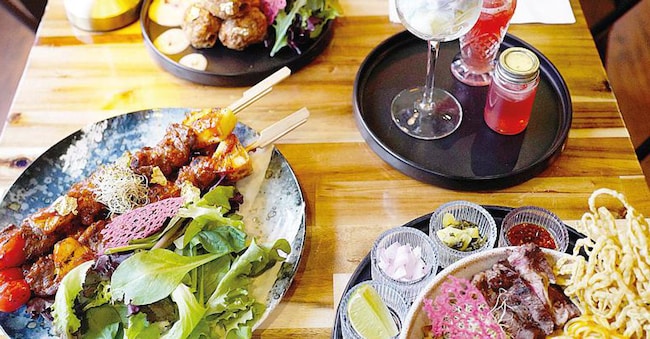
A continuous game of contamination. Not so much with a net shift in demand towards ethnic food, but with a mixing of traditions. In Italy, too, one of the new frontiers of catering is cross-border cuisine, one of the four trends that are influencing the market, between a modern reinterpretation of the great national gastronomic tradition, a new impetus of street food and the resilience of fine dining.
The new routes are mapped out by Unilever Food Solution, the foodservice division of the British multinational (which operates in the food, beauty and wellness, and home care markets) and to which we owe Menu Intel, the application that intercepts the new trends in Italian catering through artificial intelligence.
"First of all, we analyse the menus published online by the restaurants: the typology of the proposals gives us an initial address," explains Alessandro Alaimo Di Loro, head of country of Unilever Food Solution Italia. "Then, thanks to the collaboration of the wholesalers who supply the chefs, we obtain big data with indications of what they have actually sold to the restaurants. An initial experiment, involving 1,200 restaurateurs, was carried out in Trentino Alto Adige and in the area of Rome and its province. A test, in view of a second stage in Puglia, during the summer, to prepare the ground for the extension of the project throughout the country, in 2026.
By cross-referencing the data collected, not only new trends emerged, but also differences linked to the various market segments in which restaurants are placed and geographical areas. A cross-section in which emerges a Trentino Alto Adige with very strong and deep-rooted food and wine traditions, where the catering world bets on high quality service. In Rome, on the other hand, characterised by large tourist flows, the rule seems to be good service with a more standardised proposal. In both cases, however, restaurateurs are paying more and more attention to food intolerances and allergies.
However, the application is not only aimed at understanding where and how demand is moving. It also has that of rationalising and reducing production costs in a world characterised by not very high margins. "Especially now," explains Alaimo Di Loro, "the entire cost of the production cycle is taken into account, which includes not only raw materials but also labour and energy consumption. And there are solutions that have an effect on profitability: they reduce the preparation time, hence the cost of labour and energy needed. Solutions that can affect, with acost reduction of up to 25%, a market that in Italy, with over 380 thousand companies, generates revenues of 82 billion euros.

