
Assobalneari: re-establish a technical table to map state resources
Assobalneari Italia-Federturismo Confindustria asks the government and the president of the Conference of Regions for the extension of concessions

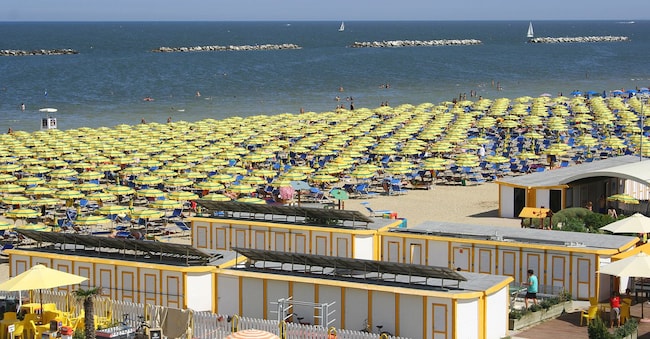
Thenational technical roundtable on the mapping of themaritime state property resource, lakes and rivers included, must be re-established as soon as possible, for the adoption of a technical extension of concessions for the correct application of Article 12 of the Bolkestein Directive. This is to avoid procedures potentially based on an incomplete preliminary framework and to allow an objective verification of the real availability of resources.
Assobalneari Italia believes, in fact, that the issue of the scarcity of the resource represents the central legal premise of the entire European discipline and must be addressed through complete, verifiable and territorially consistent data.
The request to the Government
This is the request thatAssobalneari Italia-Federturismo Confindustria makes to the government and the president of the Conference of Regions. "The Technical Table set up at the Presidency of the Council of Ministers," reads the letter, "with the involvement of numerous ministries, had started a preliminary activity aimed at verifying the actual availability of the Italian state property resource, producing data that highlighted the absence of a generalised and uniform scarcity of national coastlines. This preliminary activity, however, appears to have focused mainly on the sea coasts, without developing an organic and systematic acquisition of data on lake and river state-owned areas involved in tourism and bathing activities'.
"In numerous Italian territories, in fact, bathing activities," it is explained, "are also permanently developed along lakes and rivers, with the presence of perfectly organised and structured establishments, completely analogous to those operating along sea coasts. Situations of this kind are present not only in the main Italian lakes, such as Lake Garda, Lake Maggiore, Lake Como, Lake Orta and Lake Iseo, but also in numerous minor territorial realities strongly devoted to seaside tourism. It follows that a truly complete assessment of the possible scarcity of natural resources cannot disregard the consideration of lake and river areas as well'.
"The Court of Justice of the European Union itself," he recalls, "in its judgment of 20 April 2023, case C-348/22 (Comune di Ginosa), clarified that it is up to the Member States to determine the criteria applicable to assessing the scarcity of natural resources and that the relative verification must be carried out on the basis of concrete data and not abstract or generalised presumptions. Similarly, the Court of Justice of the European Union, in joined judgments C-458/14 and C-67/15 (Promoimpresa), expressly stated that Article 12 of the Directive only applies "where the number of authorisations available is limited because of the scarcity of natural resources. It follows that the necessary legal prerequisite for the possible initiation of public procedures is precisely the prior concrete verification of the possible scarcity of the available natural resource'.

