
Athens, between myth and reality: the city of inequalities grows under the Acropolis
The Greek capital shows a strong social and urban divide, with growing central districts and suburbs marked by a lack of housing, transport and essential services
by Silvia Martelli (Il Sole 24 Ore, Italia) and Lena Kyriakidi (EfSyn, Greece)
 Aggiungi Il Sole 24 Ore
ai preferiti su Google
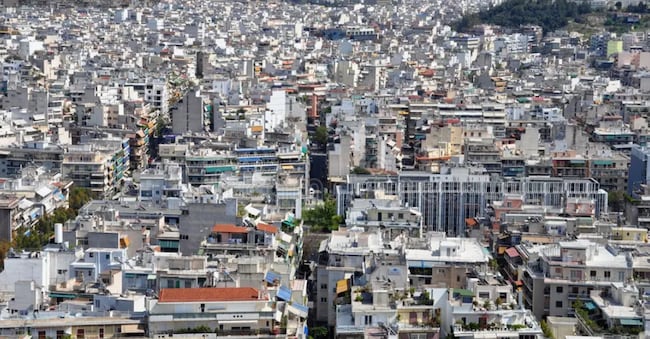
Big European cities tell stories of prosperity and growth, but also of deep inequalities. Milan, Paris, Athens and Madrid show how economic and cultural centres can coexist with suburbs marked by precarious housing, difficult access to services and social marginalisation. From the Parisian banlieues to the Milanese working-class neighbourhoods, from the Athenian suburbs to the Madrid suburbs, a common thread emerges: urban development often advances faster than the social fabric, generating 'two-speed' cities where opportunities are not distributed equally. Analysing incomes, access to housing, transport and public spaces, these reports offer a comparative look at how the suburbs of European metropolises experience a double reality, between wealth and fragility. After the episodes on Milan and Paris, the following is the report on Athens.
Athens is a city of contrasts, where the ancient coexists with the modern, and where myth is intertwined with everyday life. It is the cultural and political capital of Greece, the heart of the country's millennial history, but also a laboratory of anarchic urbanism, marked by decades of arbitrary construction and a chronic lack of public planning. Beneath the shadow of the Acropolis, between historic alleys and renovated neighbourhoods, lie suburbs where traffic, social inequalities and the housing crisis make daily life a constant challenge.
A city grown anarchic
The lack of public land, combined with intensive and often improvised urban planning interventions since the 19th century, has turned Athens into a city without clear rules. This building anarchy is reflected as much in the central districts as in the suburbs. Even today, events such as the floods show how the urban planning choices of the past continue to weigh on the lives of citizens. Nine years after the floods that killed 23 people in Attica, another tragedy struck Glyfada, a district on the southern coast, where a woman was swept away by the waters on 21 January 2026. Floods not only result from illegal constructions in areas once occupied by the Ilissos and Kifissos rivers, but also from the absence of prevention plans, public works and civil protection funds, problems that have been repeated for decades.
Traffic and service access
The contrasts between the centre and the suburbs manifest themselves daily in the difficulties of travel and access to health services. In the suburbs, travel times can multiply: to reach a public hospital, many residents have to deal with congested roads or long distances, with additional costs for taxis or private vehicles. An elderly man from Petroupolis, in the western suburbs, recounts having to spend up to EUR 60 to reach the Alexandra Hospital where he receives cancer treatment, because he cannot drive.
The lack of hospitals and public clinics in the suburbs, combined with less frequent transport links than in the centre, makes access to healthcare a privilege for those living in the central districts and an insurmountable difficulty for many in the western and northern suburbs.


