
Mapping the aubergine genome: why it is an important step for innovation in agriculture
The results of a study carried out by an international team of 24 researchers from 7 countries, including in Italy representatives from ENEA, CNR, Crea and the University of Turin, which described the complete catalogue of genes (pan-genome) and agronomic traits (pan-phenome) of the aubergine

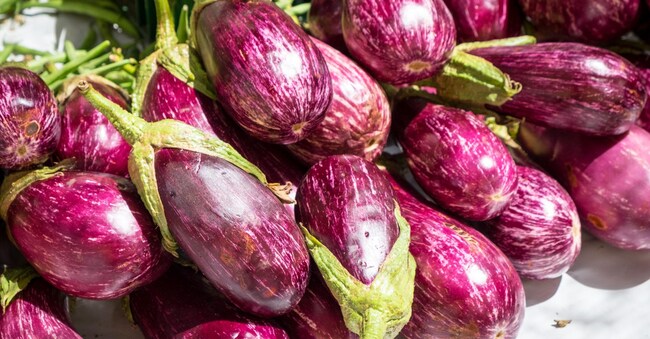
Genetic mapping for better production in agriculture. What researchers call a 'cornerstone'. The case concerns a study, on the aubergine, carried out by an international tteam of 24 researchers from 7 countries, including in Italy representatives from ENEA, CNR, Crea and the University of Turin.
The study described the complete catalogue of genes (pan-genome) and agronomic traits (pan-phenome) of the aubergine. The study now concerns the aubergine, but could also be extended to other crops. It is no coincidence, point out the ENEA researchers, "similar studies are being prepared for tomatoes, peppers and potatoes, which together with the aubergine represent over 60% of the value of European horticultural production". Not only that, this is an important achievement for innovation in agriculture. "Having at our disposal the complete catalogue of genes and traits related to them at the species level, rather than at the individual variety level," argue the ENEA, "is a mine for public and private 'breeders', who know exactly where to go and these traits for their work of crossing and varietal selection.
Starting with an extensive worldwide collection of 3,400 varieties of aubergine and its wild progenitors, the team reconstructedthe history of the domestication of the vegetable in India and South-East Asia and its expansion to the Middle East, Europe and the Far East (China and Japan), probably via Arab and Chinese trade routes.
It then went on to analyse the characteristics selected by both humans and the environment in the centres of domestication and diversification: for example, many varieties from India and South-East Asia have retained the non-purple skin colour and thorny leaves characteristic of their wild ancestors, while these traits have been progressively lost in other geographical areas
"This work isa cornerstone for the sector," emphasises Giovanni Giuliano, who coordinated the project for ENEA in collaboration with researchers Giuseppe Aprea, Paola Ferrante and Maria Sulli of the Green Biotechnology Laboratory, "not only does it rewrite the history of aubergine domestication and genetic improvement, but also enables its further improvement for future generations.
The team focused on 368 varieties, representative of the aubergine's worldwide phenotypic and genetic diversity, including its wild progenitors, Solanum incanum and Solanum insanum.
All genomic data are publicly available, as are the varieties that will be distributed according to FAO rules, "so as to ensure that the benefits of the new varieties resulting from this scientific work are shared with all stakeholders". "This win-win solution will allow all stakeholders, seed keepers, researchers, seed companies, growers and consumers," the experts conclude, "to reap the benefits of this publicly funded research".

