
Bills, from automatic compensation to call centres: the clampdown on electricity and gas complaints arrives
New rules of the Authority headed by Nicola Dell'Acqua on the quality of electricity and gas sales services are in force

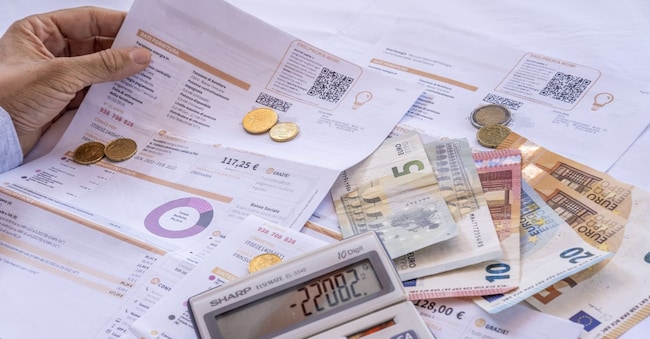
Faster procedures for responding to consumer complaints on electricity and gas bills. But also stringent obligations of transparency in billing and stricter sanctions for operators. These are some of the innovations contained in the integrated text of the regulation of the quality of electricity and natural gas sales services (Tiqv), in force since the beginning of the month, with which precise stakes have been set for companies that will have to introduce a series of changes in customer relations, starting with the handling of complaints. For which, specifies the text launched by Arera (the Authority for Energy, Networks and the Environment), forms must be made available on the seller's website, with which a comparison can be activated.
Faster response times to complaints
The Authority led by Nicola Dell'Acqua has then set precise commercial quality standards with specific timeframes for complaints: according to the Tiqv, in fact, reasoned replies from sellers to customers' communications - which, it must be said, can also be sent to operators without recourse to the appropriate forms - must be guaranteed within 30 calendar days. That rises to 60 in the case of billing corrections (90 days if billing is quarterly). While the maximum rectification time for double billing shall not exceed 15 calendar days. Not only that. Arera indicates in 95 per cent the minimum percentage of written requests for information that each operator must send within the maximum time set (30 calendar days). And, in the case of violations for the same indicator for two consecutive years, a sanctioning procedure will be triggered.
Automatic compensation
Moreover, in the event of non-compliance with the specific timeframe laid down in the Tiqv, the seller will have to pay the end customer, at the time of the first useful billing, an automatic indemnity of EUR 30, the amount of which could be doubled if the performance 'takes place beyond a time twice the standard but within a time three times as long'. If, on the other hand, the response time exceeds three times the standard, three times the basic automatic indemnity will be paid. The seller, on the other hand, shall not have to pay the automatic compensation if the failure to meet the specific quality standards is linked to force majeure (e.g. a state of calamity declared by the competent authority or strikes called without the notice required by law), to causes attributable to the end customer or to third parties, or to situations attributable to the seller.
The stranglehold on call centres
The document also introduces general quality standards for call centre services, starting with the average waiting time, which must be less than or equal to 180 seconds. While the level of service, understood as the ratio, in the month in question, between the number of calls from end customers who actually spoke to an operator and the number of calls from customers who requested to speak to an operator or who were redirected by automated systems or the voice assistant to an operator, multiplied by 100: according to the Tiqv, this bar must be 85 per cent or higher.
Under the new rules, Arera will carry out an annual satisfaction survey of end customers who use call centres in order to monitor their quality. And it will be able to impose harsher penalties on sellers who do not comply.


