Restaurants

Beach clubs, the 10 trends changing beach dining

From breakfast to yacht delivery, the new trends according to the authors of the guide to Italy's best beach clubs

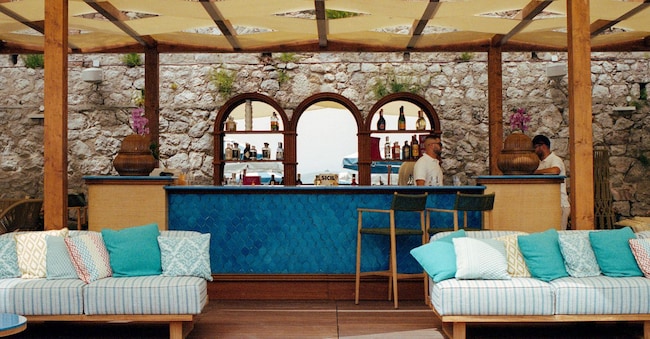
by Camilla Rocca

Lido Villeggiatura a Taormina

6' min read

6' min read

Double crowning for the best Beach Clubs of the Italian summer: Alpemare in Forte dei Marmi and Lido Villeggiatura in Taormina, two structures that are symbols of seaside excellence. The announcement was framed by the official presentation of the second edition of the Guide to the best beach clubs in Italy (Morellini Editore), signed by Andrea Guolo and Tiziana Di Masi.

"This edition features some 300 establishments (out of more than 7 thousand active in Italy), which we visited and reviewed, representing Italian beach club excellence. This is the result of two summers spent travelling along the Italian coast, from Trieste to Ventimiglia (with over 9 thousand km of travel), to discover what we consider to be real 'tourist destinations', facilities that are able to attract national and international tourism just as much as hotels, restaurants and other places of attraction," Guolo and Di Masi recount.

Loading...

"The sector is evolving rapidly, also due to the effect of Bolkestein, which has already been applied in some regions of Italy, and with important results from the point of view of investments and guarantees for those who make them. We have created the first and only guide in the world on beach clubs with parameters that include, in the assessment, all the main aspects that are normally attributed to restaurants and hotels: location, design, services and quality, catering, beverage and mood".

Alpemare di Forte dei Marmi è uno dei due migliori beach club d’Italia secondo la Guida firmata da Andrea Guolo e Tiziana Di Masi

We identified with the two authors the 10 trends that are changing the way of experiencing food&beverage at the beach:

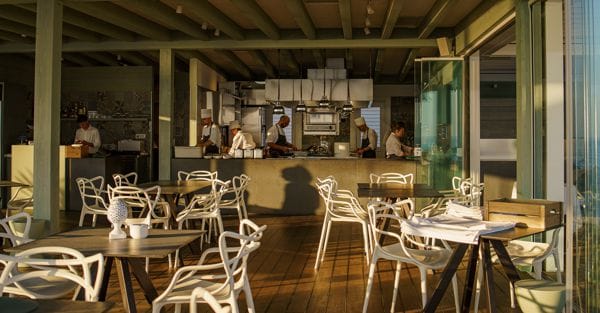
1. Separate management of beach club and restaurant

Customers demand a higher and higher level of service, from the beach to the beach restaurant, and are no longer willing to wait long for lunch. Consequently, those who start out as bathers begin to consider outsourcing the management of catering, which is a different and complicated business. And professional caterers, also having stable staff that can be moved around the beach during the summer period, are better able to manage peaks in demand and service times. Of course, the size of the kitchens must be adapted to the expected flows, because today the spaces are often inadequate and the service tends to get in the way. Looking ahead, new catering groups, even the most emblazoned, will arrive on Italian beaches, following the successful example of realities such as Langosteria.
2. Here comes the beach club with resort

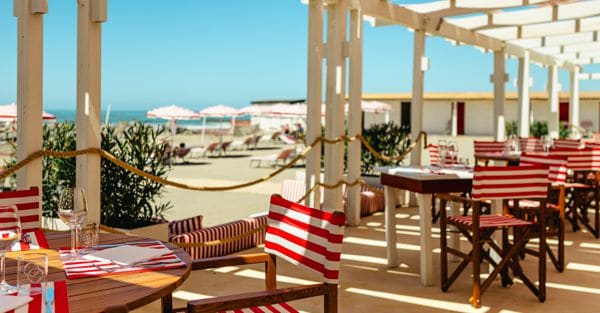
Wherever possible, beach club managers are increasingly investing in the construction of fixed or mobile facilities to give their customers the opportunity to enjoy their holiday on the beach, staying overnight with a sea view and being able to start the day with their feet on the sand. This solution is particularly interesting in those locations where the hotellerie offer is not adequate to the beach's potential, or where there are excellent beach clubs that struggle to satisfy the VIP clientele's need to stay in a hotel that meets the same standards.

3. Breakfast? It's on the beach

Among the moments of consumption, the focus on breakfast, historically the tail end of the beach club, is clearly growing. The first meal of the day eaten in front of the sea is a 'pampering', a desire that customers can fulfil at an affordable price but with high expectations of the quality of the offer: the establishments are therefore beginning to equip themselves with a pastry department dedicated to baked goods, such as brioche, and are abandoning packaged products to raise the level of the offer, also including specialty coffees and hot or cold drinks that are more refined. The pastry shop among the parasols is coming.

4. Take over? Pros and cons

In the 2025 season we will almost certainly see the arrival of other branded beaches, but this is only the tail end of the phenomenon, because in reality the more evolved beach clubs have already begun to limit or exclude the so-called takeover altogether. The reason is simple: there is the prestige of the brand that enters as a partner, but there is also the loss of identity of the establishment, which thus runs the risk of taking second place to the high-sounding brand within it. In any case, any take over must be carefully monetised, also in terms of events, and the incoming brand must be consistent with the image of the beach club. An example? That of Missoni in collaboration with the Roccoforte hotel chain.

5. Branded boutiques

There is the growing importance of merchandising for the beach club, which, as a club, has the opportunity to create its own branded clothing and accessories. In the most striking cases, this is a truly significant business for the establishment. Then there is also the possibility of creating, within the establishment, a space dedicated to boutiques in the area, with products commonly used on the beaches (suntans, eyewear, beachwear) or with typical local products, from handicrafts to gastronomy.

6. Tequila time (and low alcohol)

.

The gin phenomenon has reached its peak and the proliferation of Made in Italy labels, produced by micro-distilleries that do not have the critical mass to impose themselves at the marketing level, is likely to decline. Meanwhile, after conquering the United States and the world's great metropolises, the time seems to have come for tequila and other Mexican spirits such as mezcal. If in mixology the Latin trend is already well underway, everyone is waiting for the moment of truth for low-alcohol cocktails and even more so for alcohol-free wines: will they succeed in entering the hearts of Italians? The revolution could start with the youngest, because among the over-30s - despite fears of roadside checks - the path seems rather complex. And certainly the beach, with the summer heat, could be a good stage.

7. The magnum of rosé (still)

.

Speaking of wines, if a few years ago rosé was a phenomenon linked more to bubbly or to local consumption in the regions historically linked to this type of product (Abruzzo, Apulia, Calabria), today Italy has 'Provençalised', espousing the cause of still rosé wines in summer with a pale pink or, as the experts in the sector call it, 'onion skin' colouring. Last summer, on the trendiest beaches and aboard yachts, the magnum of still rosé was one of the musts, and we are pretty sure that this trend will spill over onto 'normal' beaches in the summer of 2025 as well.

8. Delivery to yachts

Here is a new business for beach resorts: delivering their food, wine and cocktails on board yachts (the latter is a more difficult but not impossible undertaking). To do this, they are organising delivery services that are somewhat reminiscent of what happened in the cities, but the sea riders are fortunately different from the land ones, and the business seems to be much more profitable.

9. Sunset, dancing on the sand

After the terror of the pandemic, the beaches are once again filling up with people who are not in the least bit excited about partying and dancing with their feet in the sand. Of course, restrictions tend to be more and more stringent, and it is difficult to enforce the prohibitions, limits and all the rules that a 'delicate' place like the beach imposes (e.g. consumption of drinks in glass, or closing times). This is why the 'dancing on the sand' of our summers is increasingly shifting from night to aperitif time, avoiding the high and favouring the light of sunset, which is then essential for sharing images on Instagram or TikTok.

10. Green is the colour

There is not only sustainability as a commitment, with the elimination of plastic (even the glasses become compostable, since glass cannot be used on the beach except in the restaurant area, because a glass that breaks poses a great risk to customers who rightly walk around barefoot) and with the management of increasingly environmentally friendly practices: renewable energy, water recycling, 'scientific' management of separate waste collection, beach cleanliness and a smoking ban (to prevent the sand from becoming a graveyard of unlit butts). There is also the green of the lawn, plants and trees as a natural alternative to umbrellas for protection from the sun. The most innovative bathing establishments are those that go back to nature, creating real gardens near the sea.

The guide's special awards

.

Alongside the main award, the guide conferred nine other special prizes, divided by category:

Best seaside restaurant: Locanda Perbellini al Mare (Montallegro), the seaside spin-off of the three-starred Giancarlo Perbellini.

Locanda Perbellini al Mare

Best design to Le Carillon Vesta Portofino, the first beach signed Vesta, a brand of Leonardo Maria Del Vecchio's holding company.

Sustainability: awarded to Poseidonia Beach Club (Marina di Ascea), a virtuous example in terms of the environment and transparency.

Innovation: Git Grado won the Spiagge.it Award for digitising and making the bathing experience inclusive.

Pet Friendly: awarded to Baba Beach (Alassio), a reference point for those who do not renounce the company of their pet even at the beach.

Best Location: award-winning Warung Beach Club (Masua), with a view of the Sugarloaf Mountain and roots in Sardinian industrial archaeology.

Best new opening: Bagno Saint Tropez (Fregene), launched last year, renewed the offer on the Roman coast.

Bagno Saint Tropez di Fregene

Heritage Award: a tribute to history for Des Bains 1900 (Lido di Venezia), in business for over a century.

Best municipal beach: Alle Boe (Forte dei Marmi), which has redefined the concept of accessibility with quality and style.

Copyright reserved ©
Loading...

Brand connect

Loading...

Newsletter

Notizie e approfondimenti sugli avvenimenti politici, economici e finanziari.

Iscriviti