Members-only club restaurants are also growing in Italy: here is where they are
Customers seek experiences that combine quality cuisine, an exclusive, immersive and personalised atmosphere

3' min read
3' min read
Not just a simple restaurant but an exclusive club where you can get together with friends: a new fashion starting abroad and arriving in Italy. Club-restaurants are experiencing a period of strong expansion, driven by a combination of cultural, economic and tourism factors that favour their new openings. The reasons are clear: consumers are increasingly seeking experiences that combine quality cuisine, exclusive atmosphere and entertainment. So that the experience is immersive and personalised, with proposals that go beyond the simple meal.
The membership model, often requiring payment of an annual fee that goes beyond the number of times one enters the club or consumes, offers numerous advantages for both customers and operators: exclusivity and comfort, as members can access reserved spaces, avoiding crowds and guaranteeing personalised service, even at times of great chaos such as the 'hot' weeks of trade fairs and events.Restaurants can count on a base of regular customers, reducing the risk of no-shows and improving resource planning, while for customers, knowing they are in a 'reserved' place with a strong selection at the entrance gives greater security and encourages socialising. In addition, there areexclusive benefits, such as the possibility for members to book the 'usual table' or take advantage of exclusive services, such as dedicated concierges or reserved events.
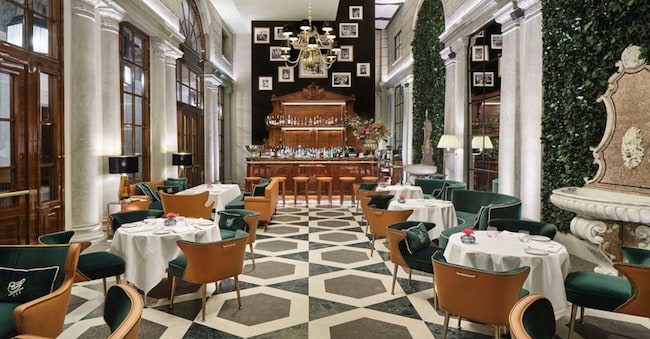
In Milan, inside the historic Palazzo Bernasconi, a restored Art Nouveau building, Casa Cipriani was born, carrying in its dowry the legacy of Harry's Bar in Venice: here one only enters by invitation or with the approval of the membership, with a significant entrance fee, often over 2,000 euros, to which is added an annual fee, depending on the type of member and the package chosen. Access is not immediate: there is a waiting list, and admission requires approval by the internal committee. Between an English club and a New York salon, one can access thematic dinners, musical performances or the private spa.
-U88667366221xQF-600x313@IlSole24Ore-Web.jpg)
Also in Milan, but with a slightly different format, there is 1930, considered by many to be 'Italy's most iconic secret private club', which recently opened a new chapter in its history: after years, it left its historic premises in Via Pasquale Sottocorno and moved to an equally mysterious and fascinating location, the basement of the Mag La Pusterla, in Via Edmondo de Amicis. The new space, set below the well-known cocktail bar of the Farmily Group, retains the atmosphere that made the 1930s famous: soft lighting, brick vaults and an intimate elegance that welcomes guests as if in a dream suspended in time. Access, of course, remains reserved. Only the 193 club members can book directly, keeping the exclusivity of the place intact. However, those who turn up at Mag La Pusterla could, with a bit of luck and a free table, be taken through a secret, reserved entrance to the heart of 1930. A true experience in surprise, where the unexpected becomes an integral part of the ritual.
The Club at Castiglion del Bosco is Italy's first and only private golf club, designed by champion Tom Weiskopf in Montalcino. The 18-hole course blends harmoniously with the Tuscan landscape and access to the club is exclusively reserved for members and guests of the Rosewood Rosewood Castiglion del Bosco resort. Becoming a member of the club means joining a select community of golf enthusiasts and lovers of Tuscan life, often from all over the world. Membership, available by invitation only, includes access to the golf course, to the historic wine cellar with the possibility of having one's own wine locker, and leaving one's favourite wines to age for years, and to exclusive events organised by the prestigious Millecento Wine Club.