
Berlin raises its GDP forecasts, but the recovery remains fragile
The Ministry of the Economy has more than doubled its forecast: expected growth in 2026 has risen to 1.3 per cent, compared with the 0.5 per cent indicated in April. In the first half of the year, a surprise boost came from manufacturing exports, as well as from public investment in infrastructure and defence. However, the price shock is testing the resilience of businesses

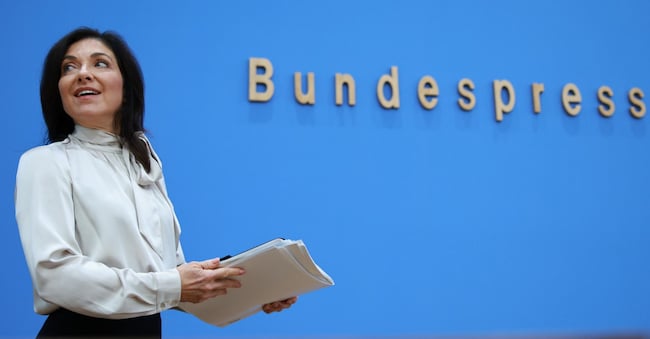
The German Government has raised its GDP growth forecasts, with growth finally expected to exceed the 1 per cent mark after years of fluctuating between contraction and stagnation. The Ministry of Economy is now forecasting a 1.3 per cent increase for 2026. Next year, growth is expected to stand at 1.1 per cent. The outlook outlined by the Government on Thursday 8th is perfectly in line with that of the country’s leading economic institutes.
Resilience to the limit
The scenario feared in the early months of the war between the United States and Iran is therefore not materialising: on the assumption that the blockade of the Strait of Hormuz, combined with US tariffs, could rapidly cripple the recovery, in April, the government had cut its growth forecasts, bringing them down to 0.5 per cent for this year and 0.9 per cent for next year (in January it had forecast growth of 1 per cent in 2026).
The energy price shock was, and remains, a legitimate cause for concern in a country already grappling with high costs. The economy, however, proved more resilient than expected in the first half of the year, partly thanks to renewable energy sources, which helped to cushion the blow.
There remain significant uncertainties regarding the sustainability of the recovery, as the economy’s capacity to respond and adapt may now be nearing its limits, whilst structural problems remain to be resolved. Indeed, the Government expects the momentum to gradually fade, with growth returning to 0.6 per cent in 2028.
Furthermore, the majority coalition between the Conservatives and the Social Democrats is riven by serious tensions, which are slowing down its reform agenda and leaving it vulnerable to a loss of support, to the benefit of the xenophobic and sovereigntist far-right party Alternative für Deutschland, which is stoking fears of decline.


