Corporate Management

Beyond automation: AI that listens, connects and improves business relationships

Artificial intelligence is revolutionising relational dynamics in companies, offering advanced tools for team management and internal communication. This change brings new opportunities but also challenges, requiring a balance between technology and humanity

by Luca Brambilla*.
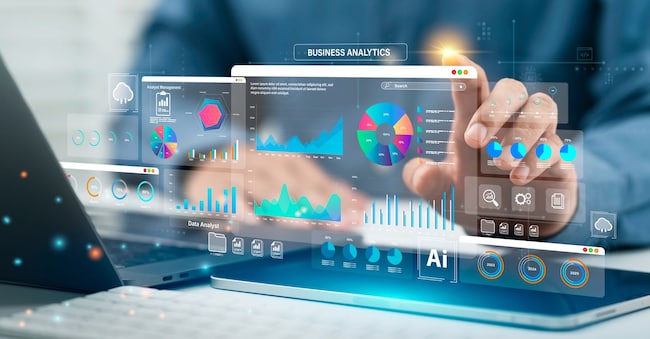
(Adobe Stock)

3' min read

3' min read

Despite the variety of technological tools to communicate, which are increasingly sophisticated and reliable, the ease with which we connect guarantees neither clarity of information nor depth of ties. This is because technology alone does not create authentic relationships.

However, the potential of Artificial Intelligence in simplifying certain complex relational dynamics should not be underestimated: that it makes people more efficient is commonly known, but perhaps not everyone knows that it can also prove to be a powerful ally in managing relational dynamics in the company. No longer an abstract promise but a reality that concretely shapes the structure of organisations. Confined until a few years ago to the automation of repetitive tasks, it now enters the finest meshes of corporate life by listening, suggesting, preventing and connecting.

Loading...

But how does the quality of relationships between colleagues, managers and teams change when technology is not just a tool but an interlocutor? And, above all, what new opportunities - and new challenges - emerge from this revolution?

The AI that observes, listens and suggests

.

Today, thanks to people analytics, sentiment analysis and AI-enhanced team management platforms, it is possible to obtain an up-to-date and detailed snapshot of the health of an organisation.

A concrete example comes from the use of tools such as Microsoft Viva Insights or Workday Peakon Employee Voice, which collect anonymous data on feedback, emails, chats and internal surveys to provide intuitive dashboards on motivation, stress, engagement and group dynamics. These systems allow managers to quickly detect signs of discomfort, latent conflicts or drops in motivation, so they can intervene before they evolve from contingent critical issues to structural problems.

Technology thus becomes a tool for prevention and active listening that the leader can integrate with his or her irreplaceable human skills. If AI quickly collects useful and objective data, it is through human skills - listening, empathy and vision - that those data are transformed into concrete actions aimed at valuing people and promoting a healthier and more inclusive corporate culture.

A virtual HR at the service of employees

The impact of AI on relational dynamics also manifests itself with particular force in team management: intelligent project management software such as Asana AI or Monday.com analyses workloads, deadlines, skills and performance of team members in real time, suggesting the most effective distribution of activities and signalling possible bottlenecks.

For internal communication, which is often the Achilles' heel of organisations, especially in hybrid or distributed contexts, Artificial Intelligence offers innovative solutions: there are chatbots that, by answering questions on policies, benefits, holidays and procedures in real time, provide uniform and clear information while freeing up HR managers' time.

The real quantum leap comes with semantic analysis systems and continuous feedback platforms, tools that monitor communication flows, anonymously identify any misunderstandings, areas of confusion or emerging needs, and collect suggestions and opinions in a structured and dynamic way.

A real-life example of this is Vodafone, which has adopted chatbots and digital feedback platforms to improve internal communication between teams distributed in different countries.

Relationships: between new opportunities and risks of superficiality

The introduction of AI in labour relations opens up new and sometimes ambivalent scenarios. On the one hand, technology makes it possible to break down barriers, facilitate inclusion, enhance diversity and promote well-being. In international companies such as IBM, multilingual chatbots allow people from different cultures to communicate without obstacles while voice assistants facilitate access to services and information for those with sensory difficulties.

On the other hand, however, there is the risk that the relationship flattens out to an overly functional dimension, losing the depth and richness typical of authentic encounters between people. Reducing communication to a sequence of prompts and responses risks losing the ability to manage conflicts, to recognise people's emotionality and to build meaning and trust over time.

This is why many companies are investing in training programmes for managers and team leaders to learn how to integrate AI without giving up the human-centredness.

Towards a new corporate culture: balance between human and digital

The future of labour relations depends on the ability to integrate technology and humanity: the most innovative companies are experimenting with hybrid organisational models in which AI supports processes without stifling creativity, empathy and dialogue.

In these contexts, paradoxically, leadership becomes more and more relational: by freeing up time and resources, AI offers managers the opportunity to cultivate more human and authentic relationships, allowing them too to pause and reflect on the questions to be asked in order to lead an organisation.

What kind of links do we want to create? What culture do we wish to promote? What style of leadership do we wish to exercise? Although extraordinary in providing answers, Artificial Intelligence must be stimulated with the right questions, it is the questions that guide thinking, guide strategy, outline future direction. As Voltaire said: "Judge a man by his questions rather than by his answers."

*Director of the Academy of Strategic Communication.

Copyright reserved ©
Loading...

Brand connect

Loading...

Newsletter

Notizie e approfondimenti sugli avvenimenti politici, economici e finanziari.

Iscriviti