
Venice Biennale, International Jury resigns. The Ministry of Culture: "We Strangers"
After the inspections in the case of the Russian Pavilion. The Culture Minister's hard line finds the full support of the European Union

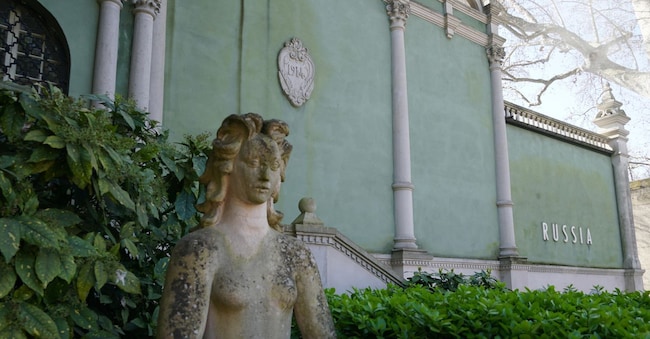
The International Jury of the 61st International Art Exhibition, starting on 9 May, composed of Solange Farkas (president), Zoe Butt, Elvira Dyangani Ose, Marta Kuzma, Giovanna Zapperi, has resigned. This was announced in a note by the Venice Biennale, in the aftermath of the visit by inspectors from the Ministry of Culture, which immediately denied any involvement.
Wednesday's visit
The possibility that inspectors would be sent to the Venice Biennale was already in the air in Marchand they finally arrived, early yesterday afternoon. Culture Minister Alessandro Giuli sent them to Ca' Giustinian to acquire information about the reopening of the Russian Pavilion at the next Art Exhibition, starting on 9 May.
However, it was clarified that 'it is not, and never has been, the ministry's intention to commission the president of the Biennial'. The MIC clarified that it had "limited itself to requesting and obtaining documents to be made available to the Maeci and Palazzo Chigi for the necessary evaluations regarding the EU's requests on compliance with the sanctions framework against Russia. As for the jury's resignation, it was learnt by Mic from the media, and only concerns the autonomous power of the Biennale. Minister Giuli, as per public statements, confirms the identity of views with Prime Minister Giorgia Meloni".
The EU line
The minister's hard line finds the full support of the European Union. "The opening of the Moscow Pavilion is incompatible with European principles," said EU Culture Commissioner Glenn Micallef, who will not go to the Biennale "as long as Russia is invited". At the plenary session in Strasbourg, the commissioner also recalled that "the EU agency for education and culture has notified the organisers of its intention to withdraw the EUR 2 million contribution unless the decision on the Russian pavilion is withdrawn". The response of M5S MEP Carolina Morace was not long in coming: "Withdrawing EU funds from the Biennale is a form of censorship". She speaks instead of an 'internal feud within the right. Giuli is playing the soldier and putting political pressure on Buttafuoco' M5s MEP Gaetano Amato. At the basis of the new controls there would also be the decision of the International Jury of the Biennale Arte to exclude Russia and Israel from the awards, as they are led by leaders 'accused of crimes against humanity'.
A battle that never subsided
While work is being done at the Giardini della Biennale in view of the pre-opening on 5 May and the workers are setting up the Russian Pavilion, the possibility of receivership is getting closer and closer. The board of directors can be dissolved, according to the Legislative Decree of 29 January 1998, when "serious irregularities in the administration or serious violations of the legislative, administrative, or statutory provisions regulating the activity of the cultural society are found; when the profit and loss account closes with a loss exceeding 30 per cent of the assets for two consecutive financial years, or losses of assets of a similar magnitude are forecast. For the first two financial years following the transformation, the percentage is raised to 50 per cent; when the assets are not reconstituted, pursuant to Article 6(2), and when it is impossible for the organs to function'. In recent months the battle against Russia's participation in the Biennale has never subsided: after last month's request to send the documentation on compliance with the sanctions and the (unsuccessful) invitation to the MiC's representative on the Biennale's Board of Directors, Tamara Gregoretti, to "resign her mandate as the relationship of trust has been broken", Giuli announced in recent days his decision to desert the inauguration and not even attend the pre-opening days of the Exhibition. Until today's epilogue.

