
Oncological prevention

Artificial intelligence revolutionises mammography screening: from two radiologists to one with greater efficiency

New Italian guidelines introduce AI to select double- or single-reading mammograms, improving time, diagnostic quality and access to screening

by Health Review

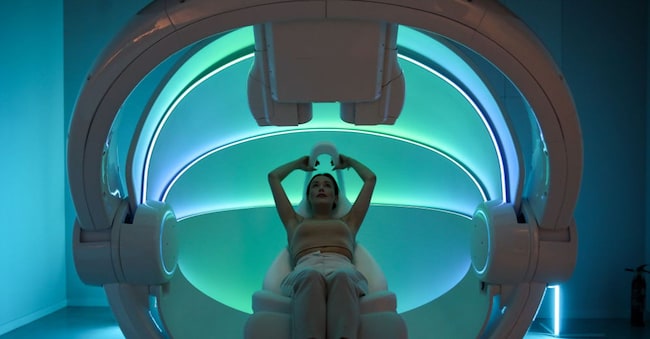
Il nuovo dispositivo AILIS viene testato per la diagnosi del cancro al seno.  (Foto di Klaudia Radecka/NurPhoto via Getty Images)

3' min read

Translated by AI
Versione italiana

3' min read

Translated by AI
Versione italiana

From the use of two radiologists to a single professional, with the support of artificial intelligence, to cut examination and diagnosis times but also to address the shortage of doctors impacting on waiting lists for potentially life-saving examinations such as mammography.

This is one of the main novelties of the new Italian Guidelines on the use of AI for breast cancer screening and diagnosis.

Loading...

For the first time in Europe, specialists are suggesting the use of AI, in the first instance, to select which examinations should be double-read and which should be single-read by radiologists.

An important innovation that, thanks to innovative information technology, can guarantee a higher quality of examination analysis.

It will also save human resources that can be diverted to other tasks.

What's changing

To announce the news is the Italian Mammography Screening Group (Gisma) that participated together with 9 other scientific societies and with the methodological support of the Cergas and the Bocconi University's Centro Dondena in drafting the new document.

It was also coordinated by the National Screening Observatory whose operational headquarters is theInstitute for the Study, Prevention and Oncology Network in Florence.

"Hitherto, the European recommendations envisaged a role for artificial intelligence alongside the current screening protocol," emphasises Silvia Deandrea, President of Gisma. "This consisted of a double reading of the mammogram, carried out by two radiologists, each giving their opinion independently.

Today Italy takes a step forward, adheres to European guidelines and proposes a new one that suggests that not all screening mammograms should always be analysed by two different radiologists.

It was realised that AI, by selecting mammography images, can better support radiologists in reducing fatigue and subjective diagnosis'.

More screening for women

With this clinical organisational turnaround, Gisma warns, workloads and waiting times can also improve overall.

Therefore, switching from employing two radiologists to just one brings undoubted advantages in view of the shortage of medical personnel.

'In a context such as Italy's, where there is a chronic shortage of radiology specialists, this is excellent news,' Deandrea continues. 'In particular, many regions are still unable to extend mammography screening to all women between the ages of 45 and 49 and 70 and 74, partly due to a lack of human resources.

Thanks to AI, it will therefore be possible to offer free screening to all eligible persons, as recommended at Italian and European level'.

Hunting for early neoplasms

In the new Italian document there are two more recommendations that implement the changes already introduced in the latest European guidelines on mammography screening.

The former suggests adding, after an initial positive human double parry, the use of AI to increase the chances of finding lesions. There is thus a greater chance of discovering early-stage neoplasms.

Cautions

The second instead proposes to not replace the second X-ray reader with artificial intelligence. These technologies, although safe and effective, are not yet able to guarantee such widespread use. 'These are non-binding recommendations but contain qualified suggestions for medical personnel and regional institutions,' Deandrea continues.

AI represents a great resource for the entire national health service and as such must be exploited as much as possible. With our new document we therefore aim to improve the quality of organised screening in Italy in accordance with the latest scientific evidence'.

Over 53 thousand cases per year

'The latest Guidelines represent a fundamental innovation in the fight against the most widespread and frequent cancer in our country,' says Paola Mantellini, Coordinator of the National Screening Observatory. 'Every year, the number of new cases amounts to more than 53,000 and more than 4 million women are invited to participate in the free programmes organised by the various regions.

However, just over 50% undergo a course that can be life-saving in many cases.

Increasing the number of participants is one of our priorities and is also to be achieved through the use of technology.

Improving the quality of the examinations provided, as all the scientific societies that contributed to this recommendation are well aware, is then indispensable if we want to encourage more women to participate.

To this end, it is very important that health professionals activate a careful monitoring to measure the diagnostic accuracy of these new AI systems in their local contexts'.

Copyright reserved ©
Loading...

Brand connect

Loading...

Newsletter

Notizie e approfondimenti sugli avvenimenti politici, economici e finanziari.

Iscriviti