

Burkina Faso reclaims its gold: the first state-owned refinery has been opened
Raffinor-BF, a plant with an annual capacity of 164 tonnes, has been established in Ouagadougou. The government led by Captain Ibrahim Traoré, who has been in power since the 2022 coup, aims to bring the mining sector back under national control and break its dependence on foreign multinationals

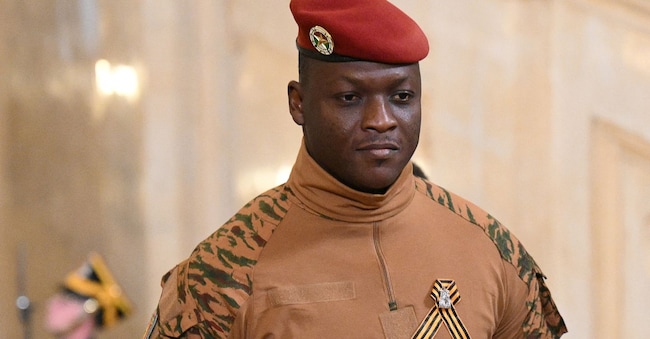
More than sixty years have passed since Burkina Faso gained independence from France in 1960. Since then, various internal conflicts have ravaged the African country, until, in September 2022, a final coup d’état led by Captain Ibrahim Traoré overthrew the previous pro-Western government, replacing it with an anti-imperialist and sovereignist military junta.
Traoré and his government’s aim has always been to free his country and its people from the yoke of financial and neo-colonialist agendas that are gaining ground in Africa. The first step in this direction was the announcement of plans to bring the country’s gold mines back under state control, by revoking the mining licences held by foreign multinationals. No sooner said than done. On 28 September, in Ouagadougou, the country’s first state-owned gold refinery, named Raffinor-BF, was inaugurated in the presence of Traoré and the Minister for Energy and Mines, Yacouba Zabré Goubad. The event was accompanied by solemn declarations of patriotic pride: ‘For too long, the sweat of our workers, the commitment of our communities and the riches of our subsoil have fuelled value chains built elsewhere. We were told that we had neither the technology, nor the capacity, nor the right to process our own resources. Today we are breaking this bond of dependence. Our gold will no longer be used to create further value for others, to build the fortunes of others whilst our people remain in need.”
Over the past two years, the country has reassessed its commitment to the exploitation of mineral deposits and has established Sopamib, Société de Participation Minière du Burkina, a state-owned body tasked with holding, managing and developing strategic mineral resources. The first two nationalisations of gold mines took place in 2025, alongside the reallocation of three exploration licences, previously held by subsidiaries of the British company Endeavour Mining and the company Lilium.
The refinery required an investment of 11 billion CFA francs, equivalent to over 16.7 million euros, funded by the Burkinabe government through the National Society for Precious Materials (Sonasp) and by private investment.
In its first phase, Raffinor-BF will have a processing capacity of 164 tonnes of gold per year. This capacity will increase to 515 tonnes per year upon completion of the second phase of installation. It will be able to employ over one hundred people and, according to the managing director Adama Sawadogo, is also expected to create around five thousand indirect jobs. The refined gold produced at the plant will have a purity of 99.99 per cent, in accordance with the international Good Delivery standard. Sawadogo went on to explain that the site has been built to the ‘highest international standards’ and will allow for the addition of further refining lines. In this way, Burkina Faso has equipped itself with a facility capable not only of ensuring the domestic processing of its gold production, estimated at over 94 tonnes in 2025, but also to position itself as a leading centre for the refining of gold and precious metals in West Africa. Burkina Faso is Africa’s fourth-largest gold producer and has made gold its main export: in 2023, it produced 57 tonnes.

