

From Bernard Lévy to Boulos, Haftar’s pro-foreign manoeuvres are the same
In 2014, we revealed a secret meeting organised by the French intellectual to encourage the various Libyan factions to divide up the country in an apparent attempt at reunification. The position of the Cyrenaican general is now being revived, years later, with the US envoy. And the Israeli role

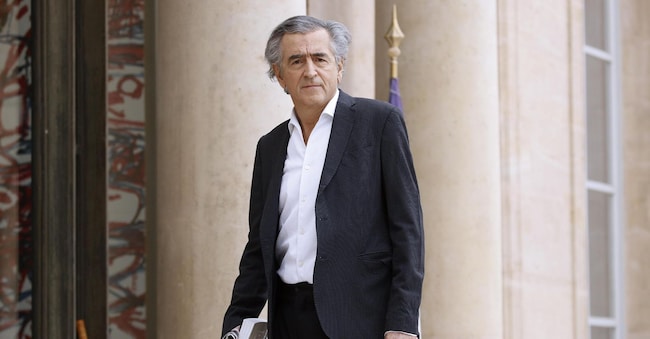
From the secret meeting between Khalifa Haftar and Bernard Lévy, known for his pro-Israeli views, at Mitiga Airport, in Tripoli in May 2014, and the public meetings with Massad Boulos, an envoy of US President Trump, as part of the US initiative proposed in 2026, lie years of political and military transformations in Libya. Between these two events, questions arise regarding the role that Haftar is seeking to establish amongst international powers, and the extent to which his rise is linked to calculations that extend beyond the confines of the Libyan conflict.
The 2014 scenario
In May 2014, the political landscape in Tripoli was chaotic and characterised by overlapping dynamics, following the dismissal of Prime Minister Ali Zeidan by the General National Congress, which was dominated by Islamist forces. Zeidan contested the decision, claiming that he was still in office and questioning the legitimacy of the appointment of Ahmed Maiteeq, whose name was associated with Islamist factions.
The political division was reflected in the security situation. Tripoli’s civilian airport was under the control of forces from Zintan, allied with the coalition of civilian forces and parties, whilst the Mitiga military base was under the influence of the Libyan Islamic Fighting Group, led by Abdelhakim Belhaj. Against this backdrop of fragmented power, the capital was caught between the proliferation of weapons and the presence of numerous armed groups, some of which were linked to extremist organisations and international jihadist networks. Several key figures on the political and military scene also had a history of serving in Afghanistan and elsewhere on behalf of the United States, as subsequently emerged.
During the same period, the new military institution was taking shape under the leadership of General Youssef al-Mangoush, then Chief of the General Staff, who was accused of being close to the Muslim Brotherhood and their aim of creating an army loyal to the Brotherhood, presented as a preferable alternative to chaos. The positions adopted, however, confirmed the Muslim Brotherhood’s support for both these paths, thereby forcing the population to accept their project as an alternative to terrorist organisations and uncontrolled armed groups, according to the logic: ‘If you do not accept this, you will have to face that’.
On the other side, armed groups allied with civilian forces were seeking to consolidate their presence on the public stage. In the midst of this conflict, Khalifa Haftar, who had arrived from the east as Chief of Staff of the ground forces, succeeding General Abdel Fattah Younes, who was assassinated in mysterious circumstances on 28 July 2011, which remain unexplained to this day, sought to pave his way to the Ministry of Defence, capitalising on his rapprochement and alliance with the armed factions opposed to the Muslim Brotherhood. Khaled al-Sharif, a leader of the Libyan Islamic Fighting Group, was also vying for the post of Minister of Defence, whilst the name of Abdelhakim Belhaj was put forward for the Ministry of the Interior.

