
Election campaign

Why are Haftar and the Muslim Brotherhood afraid of the elections?

The demographic imbalance favours the constituencies in the West. Although the eastern government is seeking support in Tripolitania by capitalising on public discontent, there is pressure to remove the president, who has, however, successfully managed the local elections. Meanwhile, the Brotherhood is relying on the strength of its arms, given its lack of representation at the ballot box.

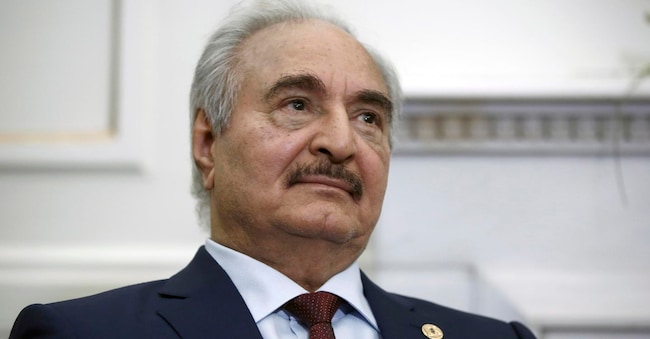
Il comandante dell'Esercito Nazionale Libico  Khalifa Haftar (EPA)

4' min read

Translated by AI
Versione italiana

4' min read

Translated by AI
Versione italiana

The parliamentary and presidential elections in Libya represent, for large sections of the Libyan population, the hope of achieving stability in the country. However, this popular demand, which has been postponed for over a decade, faces obstacles that prevent its realisation every time a date is set, thereby prolonging the transition period and the suffering of the people.

The head of the National High Electoral Commission, Emad al-Sayeh, has confirmed in previous public statements that the postponement of the presidential and parliamentary elections in Libya is not primarily due to technical reasons, indicating that the obstacles are mainly of a political nature.

Loading...

The Libyan electorate

The question is: which parties regard the holding of elections as a threat to their interests and their position of influence, should they take place in a free political climate?

The issue extends to the reasons behind the decision to replace the head of the electoral commission, Emad al-Sayeh, within the framework of the 4+4 Committee, which comprises representatives from both the faction of Khalifa Haftar and the Government of National Accord. This issue takes on particular significance in light of the Commission’s organisation of several local elections between 2024 and 2026, which, according to media reports and Libyan accounts, took place smoothly in various regions without any significant irregularities.

For clarity, according to international demographic estimates up to 2026, Libya’s population stands at around 7.56 million. Western Libya, including Tripoli, has a population of around 4.78 million; eastern Libya has around 2.2 million; and the southern cities have an estimated population of around 500,000.

According to the database of the Libyan High National Electoral Commission, the total electorate comprises approximately 2.86 million registered voters. The majority of registered voters, around 1.82 million (63.6 per cent of the total), are concentrated in the cities of western Libya. Cities in eastern Libya have around 770,000 registered voters, accounting for approximately 27 per cent, whilst the number of registered voters in southern cities stands at around 240,000 (8.4 per cent), with the majority concentrated in Sabha. This disparity reflects greater demographic and electoral weight in favour of the West compared to the East and South.

From 2014 to 2019, the Eastern Front sought to expand its popular base in western Libya, capitalising on widespread popular anger towards the post-2011 model of government and the proliferation of militias and armed groups, which bolstered the eastern armed forces.

Consent management

Khalif Haftar presented himself as a force capable of countering extremist groups and restoring security. He sought to legitimise his military project by naming his forces the ‘Libyan National Army’ and presenting them as the cornerstone of state-building. However, his attempt to capture Tripoli by force in 2019 cost him the popularity he had hoped for, and his project was confined to the areas under his control in the east of the country and in certain parts of the south.

On the other hand, the results of the 2012 National General Congress elections and the 2014 House of Representatives elections reveal a disparity between the direct electoral weight of the movement affiliated with the Muslim Brotherhood and its actual influence within certain institutions.

In the General National Congress elections, the Justice and Construction Party, affiliated with the Muslim Brotherhood, secured around 152,000 votes, equivalent to approximately 10.3 per cent of the votes cast for party lists, according to the results announced. This figure contrasts with the approximately 715,000 votes obtained by the Alliance of National Forces, led by the late Mahmoud Jibril, accounting for 48.1 per cent. However, electoral weight was not the only determining factor in the distribution of influence within the General National Congress. Alliances with independents and armed groups also played a role in shaping the balance of power and influencing decisions in favour of the Islamists. Following the parliamentary elections in June 2014, the representation of Islamist movements in the House of Representatives declined compared with the previous elections, with candidates affiliated with them winning around 30 seats out of 200. This led to the outbreak of armed conflict, culminating in the division of the institutions and the relocation of the House of Representatives to the eastern part of the country. Tripoli remained under the influence of various armed groups with differing political affiliations, which thrived on Haftar’s mistakes.

Loading...

Restrictions on freedoms, persecution and limitations on civil society

The situation in the East and West has been similar in terms of the suppression of freedoms, the persecution of activists and opponents, and the elimination of rivals outside the legal framework, as revealed in a recent report by Human Rights Watch. This, together with the restrictions imposed on public activity, political parties and civil society organisations, raises further questions about the intentions of the armed forces controlling both sides to create a political environment that allows for genuine competition.

The East, led by Khalifa Haftar and his sons, faces challenges regarding its ability to translate military power into a broad electoral mandate at national level, whilst movements associated with the Muslim Brotherhood and other political forces in the West face a significant challenge regarding the extent of popular support at the ballot box. Furthermore, the Government of National Unity and its alliances with the Muslim Brotherhood and forces that benefit from the status quo have long been the subject of popular rejection due to a lack of services and deteriorating living conditions. Against this backdrop, the interests of the competing parties (hypothetically) converge and a consensus emerges amongst them, as demonstrated by the outcomes of the 4+4 Committee and the US initiative to extend the transition period for a further two years. The holding of genuine parliamentary and presidential elections would reshape the political landscape in accordance with the will of the electorate.

Reda Shaaban, a writer specialising in Libyan affairs

Copyright reserved ©
Loading...

Brand connect

Loading...

Newsletter

Notizie e approfondimenti sugli avvenimenti politici, economici e finanziari.

Iscriviti