
Processions, rites and traditions of Easter in the villages of central southern Italy
Campania: Frigento and the collective portrait of the 'Mysteries
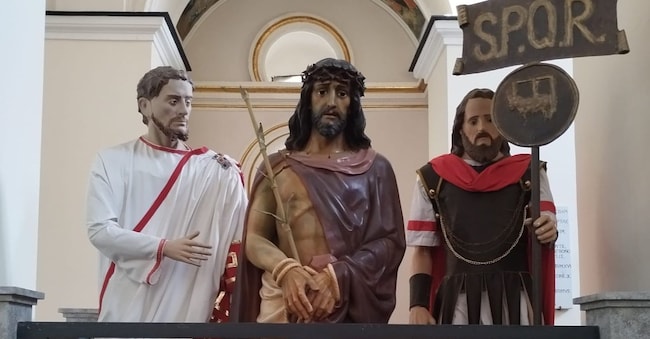
In the heart of central-northern Irpinia, the village of Frigento offers one of the most fascinating examples of the link between sacred art and local identity. The 'Mysteries' of Frigento, dating back to the mid-19th century, are papier-mâché sculptures of the Neapolitan school that present an absolute uniqueness: the faces of the evangelical figures trace the physiognomies of the inhabitants of the time. Observing these Stations of the Cross is like leafing through a collective family album, where 19th-century peasants and notables lend their faces to apostles and centurions. Of extraordinary symbolic value is the planking of the 'Array of Angels', a scene that deviates from the traditional canon to offer a theological synthesis understandable to all, where angels hold up the instruments of martyrdom. Frigento, with its millennial history ranging from the Palaeolithic to the Baroque, transforms Holy Week into a living archive. The craftsmanship in dressing the statues with real fabrics and the expressive intensity of the figures give the celebration a plastic realism that has ensured this rite a place of honour in the region's intangible cultural heritage.

