
Cape sharks in the Gulf of Naples: up to 5 metres long but not dangerous to humans
Discovery by a team of researchers, author Noah: 'Encouraging presence for the gulf'
Key points
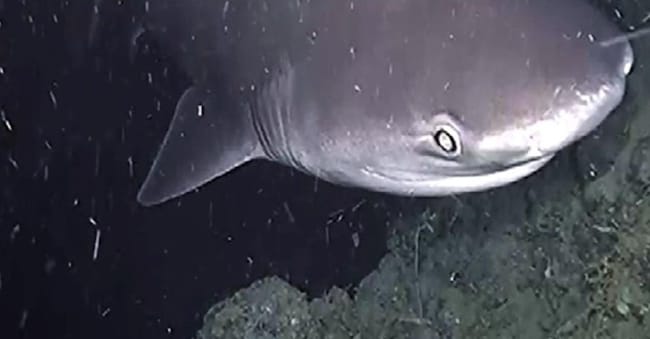
It was in December last year when the remains of a cape shark were found near a quay in the port of Ischia. Several months later, a team of researchers from the Anton Dohrn Zoological Station identified in the waters of the Gulf of Naples a population of the same species.
A surprise not only for Neapolitans, but for the scholars themselves. This was reported by Simona Noè, lead author of the study. Only a few individuals had previously been observed, but as the researcher says, "we had no idea there were so many in such a small area". Accomplices are the coral reefs on the seabed that become a refuge for these sharks, deep bioconstructions located between the islands of Ischia and Capri.
The researchers' study
The research - funded by the National Biodiversity Future Center - used purpose-built underwater video systems equipped with bait to attract sharks (safely). The study was published in the journal Ecology and for project leader Trevor Willis, it represents an important moment in learning about the capabilities of this shark about which we currently 'still know very little'.
Reassuring the population is the author of the study, Simona Noè, who adds: 'The presence of such a large aggregation of these sharks in the vicinity of a large metropolitan area is encouraging for the ecosystem of the Gulf of Naples.
How the species looks
It has a robust anatomy, a flattened head and a small dorsal fin that differs from the one that slices the surface of the water in two found in larger species. This is what the flathead shark looks like, one of the many names by which the Hexanchus griseus is called. The other names are bull dog shark, cow shark and six-gill shark.

