
Capocollo di Martina Franca has officially been granted PGI status
This brings the total number of Italian agri-food PDO and PGI products registered at European level to 332.

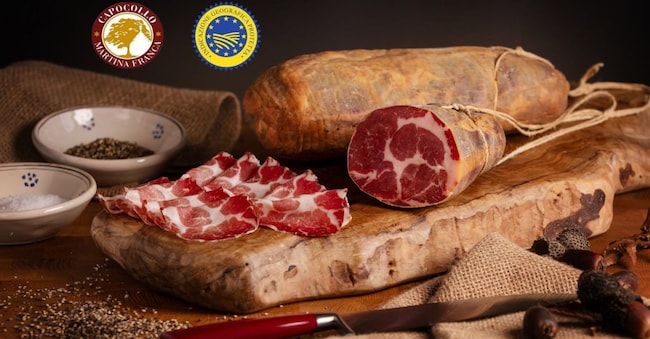
The name “Capocollo di Martina Franca PGI” was registered in the Official Journal of the European Union on 15 October 2026: the well-known Apulian cured meat has therefore officially been recognised as Protected Geographical Indication (PGI) .
On this occasion, the Ministry of Agriculture, Food Sovereignty and Forestry noted that, with this new designation, the number of Italian agri-food PDOs and PGIs registered at European level has risen to 332.
“Another important milestone for our agri-food excellence,” stated the Minister for Agriculture, Food Sovereignty and Forestry – “Italia confirms its European leadership by promoting products that preserve the history, traditions and expertise of their regions, as in the case of Capocollo di Martina Franca. Protecting these designations means safeguarding the work of producers and guaranteeing quality, identity and traceability for consumers.”
This product is linked to the pork-curing tradition of the Itria Valley , handed down through generations, characterised by the use of ‘mire cutte’ – or cooked wine – in the curing process, made from Verdeca and Bianco d’Alessano grapes. Another distinctive feature is the smoking process, which uses wood and dried leaves of the fragno oak (Quercus troiana Webb), native to the Itria Valley, together with the use of natural pig casings, known as ‘muletta’, which help to impart the meat’s characteristic smoky flavour. Produced at an altitude of over 350 metres above sea level, the product benefits from the cool, breezy climate of the area, influenced by the proximity of the Ionian and Adriatic Seas and the alternating mistral and sirocco winds. Traditional craftsmanship is fundamental, and is evident in the manual processing of every stage, from the preparation of the meat to dry salting, which gives the capocollo its characteristic shape.

