

Trump is taking on China, but the Obama factor comes into play in the battle over AI
The industrial and geopolitical contest over artificial intelligence involves Washington, Beijing and Silicon Valley. The US fears losing ground to Xi, but the former president warns of the risk of technology outpacing politics. Whilst the race for chips is reshaping the balance of power, Europe risks remaining merely a consumer, even with its infrastructure and data centres.

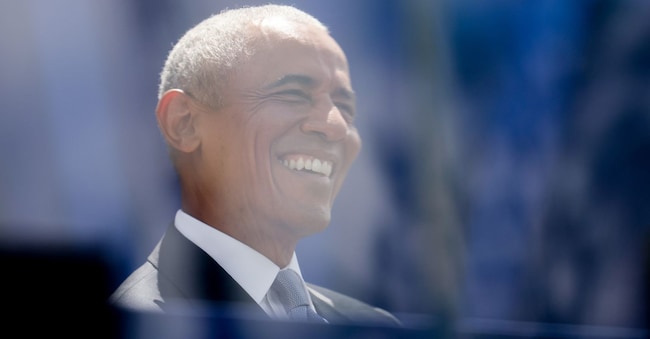
Donald Trump fears that slowing down artificial intelligence would mean handing the advantage to China. Barack Obama views the same phenomenon from the opposite perspective: a technology that is growing so rapidly in the hands of private entities risks outpacing the ability of policymakers to regulate it. In Beijing, the Minister of State Security, Chen Yixin, views AI as a potential tool for strategic pressure and a threat to national security. Three different positions. Almost diametrically opposed. But perhaps they all tell the same story: artificial intelligence is ceasing to be merely a technological sector. It is becoming an infrastructure of power. The competition is no longer just about who will build the smartest model. It is about who will control what makes it possible: energy, chips, computing power, the cloud, data, models, networks and robotics. And above all, who will be able to grant or deny others access to any of these elements. The Huawei affair remains a useful precedent. The arrest of Meng Wanzhou in 2018 and the subsequent American pressure to restrict Huawei’s role in 5G networks were based on different legal grounds. It would be incorrect to conflate them. But they revealed something that we can see even more clearly today: when a technology becomes strategic, national security, the law, diplomacy and industrial competition begin to occupy the same space.
With AI, that convergence has already taken place
Dario Amodei is calling for a slowdown in the race to the frontier. Sam Altman and Elon Musk share at least some of this concern. Trump retorts that slowing down means risking defeat against Beijing. This is the paradox of strategic technologies: the more powerful and potentially dangerous they become, the greater the need to regulate them; but the more they determine a state’s power, the less anyone can afford to be the first to slow down. It is a dynamic reminiscent of an arms race: everyone may want greater security, but no one wants to come second. Added to this is capital. The race for AI is absorbing investment on an unprecedented scale. And when hundreds of billions are being poured into chips, data centres and energy, the issue is no longer simply about building better models. It becomes necessary to demonstrate that revenue and productivity will be sufficient to recoup that mountain of capital. There is a risk of a financial correction. This does not necessarily mean a bubble, but it does make the slowdown an economic variable as well. Then there is China. It would be a mistake to imagine Washington and Beijing simply set on building the same product.
The United States retains a lead in cutting-edge models, the most advanced chips and computing power. China, however, has a different advantage: an extraordinary industrial capacity to turn algorithms into physical objects. Automotive technology, batteries, sensors, industrial robots and humanoids are converging in physical AI. This is perhaps one of the most important frontiers of the coming years. The transition from model to robot could represent for AI what the smartphone represented for the Internet: the moment when a technology moves beyond infrastructure and begins to physically inhabit the world. The United States has built the most powerful machine for producing digital intelligence. China may attempt to transform that intelligence into a physical presence on an industrial scale. The boundary between the civilian and military sectors is also narrowing. Cloud computing, chips, models and software developed for the commercial market are rapidly finding their way into defence, intelligence and national security programmes. This is not simply the old military-industrial complex. It is something different: increasingly, strategic innovation originates in the civilian market and is subsequently absorbed by state apparatus.
European developments
The gap here is clear. Mistral, our most high-profile example, is valued at around 25 billion dollars. Anthropic has reached valuations of close to 1,000 billion. The gap is not merely financial: it means more chips, more energy, more talent, more infrastructure and more opportunities to make mistakes, learn and try again. Thinking we can catch up simply by building a European copy of OpenAI today therefore risks fighting the previous battle. But this does not mean the game is over. There is not just one frontier in AI. Physical AI, autonomous agents, the cybersecurity of agent-based systems, autonomy control and, above all, vertical applications are areas where the race is still wide open. And it is precisely in these vertical sectors that Europe possesses something that capital alone cannot easily buy: decades of data, processes, expertise and industrial know-how in the automotive, manufacturing, energy, aerospace, pharmaceutical, healthcare, defence and critical infrastructure sectors. Europe does not necessarily have to build the largest model. It must build something that others cannot easily replace. To do so, however, infrastructure is needed. And this is where one of our most dangerous paradoxes emerges. On the one hand, we call for technological autonomy; on the other, we discuss data centres almost exclusively in terms of their consumption of energy, water and land. These are real problems and they must be managed.
The data centre issue
But a data centre in the AI economy is not simply a building full of servers. It is a factory of cognitive capacity. We cannot call for technological independence whilst at the same time calling into question, without an alternative strategy, the infrastructure needed to build it. Regulation and infrastructure can therefore become two European levers, but only if they are used to generate industry. The AI Act empowers us because Europe controls one of the world’s richest markets. AI Factories, Gigafactories and energy capacity can provide us with computing power. But regulations and data centres only acquire geopolitical value if they serve to produce European intellectual property, businesses and technologies. Otherwise, we risk building excellent roads on which only other people’s cars will travel. The real dependency of the future, in fact, will not be using an American chatbot. It will be discovering that banks, hospitals, industries, transport and public administrations depend on models, cloud services and computing power where fundamental decisions are taken elsewhere. Trump fears that America will lose its leading position. Obama fears that politics will lose control. Beijing fears that AI could become a strategic lever in the hands of an adversary. Europe should be asking itself a different question: what must we possess so that no one can decide the future of AI without also having to negotiate with us? We do not have to win every race. We must possess at least one frontier, one piece of infrastructure or one area of expertise without which others cannot win the game. Because one does not sit at the tables of power by right. One sits there when one controls something that others need.

