Asian Horizon

China is setting up factories in Africa: 7.7 billion invested in manufacturing

From Beijing’s investments in manufacturing to critical raw materials, a transformation is reshaping economic relations between the continents. Europe faces the same problem: financing infrastructure and securing supplies does not mean controlling industrial value

by Charlye Ghezzi

Aggiungi Il Sole 24 Ore
ai preferiti su Google
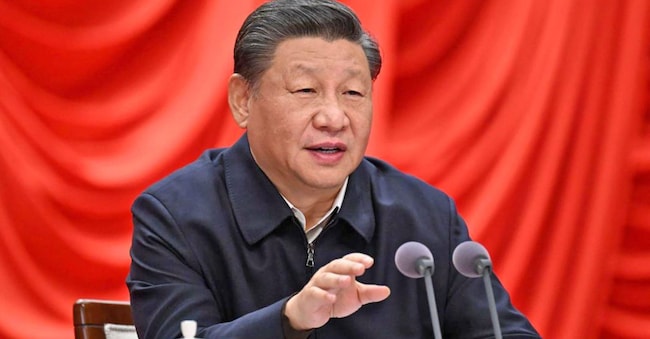
Xi Jinping, segretario generale del Partito Comunista Cinese  Li Xueren/Xinhua. Alamy Stock Photo

5' min read

Translated by AI
Versione italiana

5' min read

Translated by AI
Versione italiana

China is changing the nature of its economic presence in Africa, gradually shifting from a model dominated by infrastructure, raw materials and major projects towards more direct involvement in manufacturing. In 2025, reported Chinese investment in African manufacturing and industrial processing reached $7.7 billion, compared with $4.8 billion in the extractive sector. But behind this apparent shift lies a contradiction that affects European industrial policy: building factories in Africa does not necessarily mean transferring control of production to Africa.

The new Chinese expansion

To understand this shift, we must begin with a distinction that is often overlooked. Beijing is not abandoning the Africa of mines, railways and ports to suddenly turn its attention to manufacturing. Rather, it is developing a model in which infrastructure, access to resources, industrial financing and production can become components of a single economic system.

Loading...

The Forum on China–Africa Cooperation , which met in Beijing in September 2024, formalised this approach in the 2025–2027 action plan. The programme provides for support for ten industrial park projects, one hundred training sessions on industrialisation, fifty initiatives to link small and medium-sized enterprises, and one thousand management training opportunities. The cooperation also covers the processing of critical raw materials, the development of supply chains, and infrastructure to support industrial estates.

The statistics confirm just how important it is to distinguish between intentions and actual production capacity. According to the Rhodium Group, in 2025, newly announced Chinese direct investment projects worldwide totalled $124 billion, whilst those completed in the same year amounted to $73 billion. These are not two perfectly overlapping sets of projects, but the gap demonstrates how inappropriate it would be to automatically equate announcements with operational industrial capacity.

There are also significant differences across Africa. In Kenya, there are reports of over 350 Chinese companies and around 11 billion dollars’ worth of declared projects, with a significant manufacturing component. In Tanzania, the figures indicate $12.5 billion in commitments since 2017, with around two-thirds attributable to manufacturing and approximately 150,000 associated jobs. These figures require a strict distinction to be made between registrations, realised investments and actual employment. In March 2024, the Office of the Vice-President of Tanzania reported a cumulative value of approximately 11.4 billion dollars for Chinese projects covering the period 1997–February 2024: a different statistical scope, which prevents direct comparisons.

In 2025, trade in goods between China and Africa reached approximately 348.05 billion dollars, representing an annual growth rate of 17.7 per cent. Chinese exports to Africa totalled 225.03 billion, up 25.8 per cent, whilst imports from the region stood at 123.02 billion, rising by 5.4 per cent. The trade surplus in favour of China reached $102.01 billion. Although the number of factories is increasing, the commercial balance of the relationship remains heavily weighted towards the Chinese economy.

True industrial power

The key issue concerns the internal structure of the factories. An African factory can produce goods intended for both local markets and exports, whilst using Chinese machinery, imported components, proprietary software and commercial contracts managed by the parent company. The outcome may be economically positive without constituting a complete industrial transformation. Employment grows, a portion of wages is distributed locally, and production contributes to the national GDP. However, the capacity to design the product, modify industrial processes, select suppliers and reach customers independently may remain abroad.

The difference between manufacturing and production sovereignty is particularly evident in mineral refining. Processing a raw material within the country of origin means retaining a greater share of the industrial activity than simply exporting the ore. However, it does not necessarily mean controlling the chemical technologies, plant facilities, patents or markets in which the refined material is subsequently used. A 2019 study on Chinese manufacturing investment in Ethiopia showed that knowledge transfer depends on the characteristics of local firms, the skills available and the organisation of production clusters. It is not enough for African workers simply to operate advanced machinery: the industrial leap forward occurs when technicians, engineers and domestic firms acquire the capacity for maintenance, design, adaptation and independent production.

The physical constraints of this transformation are equally important. A study by the World Bank published in 2025 found that 72.1 per cent of the businesses surveyed in sub-Saharan Africa had experienced power cuts, whilst 51.1 per cent owned or shared generators. A large international company can fund dedicated energy systems; a small African firm wishing to supply it with components often lacks the same resources.

This is where the risk of an industrial enclave arises: an efficient factory, linked to international suppliers, surrounded by a national economy that still lacks the necessary tools to participate in the most sophisticated forms of production.

Loading...

Brussels wants to diversify its energy supplies

This transformation has a direct impact on European industrial policy. The European Union faces an economic security issue that goes beyond the mere physical availability of minerals. This vulnerability also extends to refining processes, intermediate technologies and the concentration of suppliers.

European Regulation 2024/1252, known as the Critical Raw Materials Act, has set benchmarks for 2030 requiring domestic capacity equivalent to at least 10 per cent of Europe’s annual consumption of strategic raw materials in extraction, 40 per cent in processing and 25 per cent in recycling. A further benchmark aims to ensure that no more than 65 per cent of the consumption of each strategic raw material, at the relevant processing stage, comes from a single third country.

In June 2025, the European Commission selected thirteen strategic raw materials projects located outside the EU. At the same time, the Africa–Europe Global Gateway package identifies around €150 billion in investments to be mobilised. These are instruments of considerable institutional significance, but neither the selection of projects nor the financial ambition equates to the availability of completed facilities.

The Lobito Corridor

The Lobito Corridor provides a concrete example of the importance attached to infrastructure linking African resources to international markets. In December 2025, the US International Development Finance Corporation announced the financial closure of the transaction in support of the Lobito Atlantic Railway, covering approximately 1,300 kilometres of railway infrastructure and port connections in Angola. Project estimates projected a transport capacity of 4.6 million tonnes and potential reductions of up to 30 per cent in the costs of handling critical minerals: these are expected outcomes, not results that have already been achieved.

2027 will be the first test: those who fund without measuring will end up paying twice

Between the end of 2026 and 2028, an initial assessment of the industrial ambitions formalised in recent years will emerge. The FOCAC 2025–2027 Plan, namely the strategic document through which China and African countries set out the guidelines for their economic, political and infrastructural cooperation, will reach the end of its operational period; the European Union will continue to make progress towards the objectives of the Critical Raw Materials Act for 2030.

Three outcomes remain possible. Chinese investment could continue to increase, leading to limited but genuine improvements in employment and skills. It could foster more substantial growth amongst African suppliers, technicians and businesses capable of operating independently. Or it could lead to the establishment of efficient facilities that are, however, dependent on external technologies, components and decisions.

Charlye Ghezzi is a geopolitical analyst and specialist in technology and government security

Copyright reserved ©
Loading...

Brand connect

Loading...

Newsletter

Notizie e approfondimenti sugli avvenimenti politici, economici e finanziari.

Iscriviti