
Circular economy, Florence architects focus on rice waste
Building houses with building materials made from rice waste. The initiative of the Order of Architects of Florence

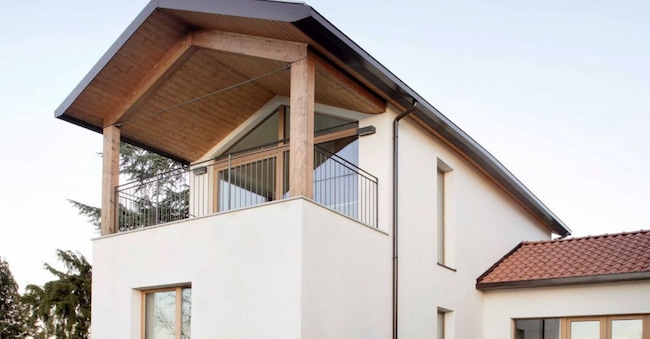
From rice waste to building materials. A perfect model of sustainability whererice husk is used for housing (e.g. for roofing), also improving liveability. For some years now, the Agritettura group of the Dapa (Debate Architecture, Landscape, Environment) Commission of the Ordine degli Architetti di Firenze has been talking about examples of circular economy in a world where there is a need to reduce waste.
At the conference held at the Palazzina Reale, the headquarters of the Order and Foundation of Architects, the example of the company Ricehouse, founded by Tiziana Monterisi and based in Biella, was told. Ricehouse valorises the by-products of Italian rice production with the production of innovative building materials, using them for various architectural and design projects. In short, they take waste from Piedmont and Veneto and then reuse it. In recent years, Ricehouse has started a collaboration with Autogrill - for service area furnishings - and has, for example, redeveloped four social housing towers on the outskirts of Milan.
Monterisi's experience
'The materials we have come up with are a reality that can change the world of construction,' Monterisi explained. 'As a designer, I tried to build healthy houses and I looked for materials that would allow me to build these houses. From there I came to produce them because there were none on the market: then rice is produced in Italia as the leading European producer. From there I built a company that produces building materials - so bricks, plasters, finishes, insulation - from Italian rice waste in Italia.
The final cost is within the average for a house in Italia and, moreover, rice husk, Monterisi added, 'is insulating against heat and cold. For those who will live in it, it is healthy, they are materials free of formaldehyde, Voc, metals. The worker who is in the factory and produces the materials, perhaps doing the same job for 40 years, does not breathe something toxic with this solution. The same goes for the worker on the building sites and then for those who will live in the house. And finally: young people will not have problems with special waste in 50 years' time.
Rice husk: a safe and healthy choice
So: circular economy, low cost, health benefits. That's no small thing. Mariantonietta Del Sole, advisor to the Dapa Commission of the Order of Architects, recalled that the 'Agritettura group has been working on these issues since 2015. Rice husk ensures wellbeing inside the home, is breathable and fireproof. In short, in general, it is an added value of the environment, we are perfectly within the circular economy'. Antonio Bugatti, vice-president of the Order of Architects of Florence, explained that these appointments "serve to make the client and end user aware of the added value of the new materials. The added value is also given by working in an ethical supply chain'.

