
Circular economy, recycling becomes a geopolitical factor
Circularity enters long-term industrial strategies. Here is the ten-point guide for a sector testing its maturity

Ten key points that will characterise the circular economy sector in 2026. The news has been published by Circularity, a benefit company active in the sector that accompanies companies at all stages of the journey towards integrating ESG principles into their business model: the guide, 'Circularity Trend Guide 2026', is free of charge and includes regulatory references for the four-year period 2026-2030.
The Ten Points
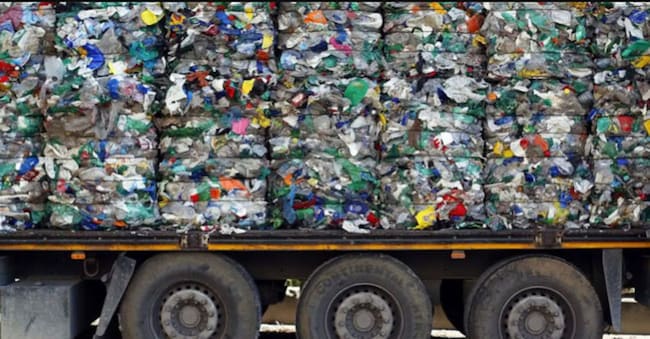
One of the ten points concernspackaging: in 2026, the guide reads, "packaging will become a 'rule-proof' object: it is no longer enough to be recyclable in theory, it is necessary to design packaging that withstands technical requirements, real supply chains, controls and reporting". Here Italy performs well: it already exceeds the EU targets of both 2025 set at 65% and 2030 set at 70%.
The demand for raw materials (this is the second point) is growing "significantly in many supply chains, but not uniformly", "in 2026 the real competitive advantage is not to declare the use of recycled material, but to be able to manage this asymmetry, ensuring quality, continuity and traceability where the market allows it, and mitigating risks where demand remains weak or volatile".
In 2026, the discontinuity factor is "the technological and skills leap that is transforming the management of material flows", just as the idea that "technological waste is not 'end-of-life' but industrial stock" is consolidated this year. The point - the report explains - "is not just to recover, but to collect enough (and well) to make advanced plants sustainable".
Circular Economy and Geopolitics
The fifth point, geopopop, speaks of the fact that "critical raw materials policies transform recycling into an instrument of geopolitical autonomy. Circularity becomes part of long-term industrial strategies", in 2026 then - it is the sixth key concept, the circular cv - "it is not enough to 'make' circularity: it must be demonstrated. Indicators, Kpi and standards become the common language between companies, finance and institutions'.

