
Circular economy, I go to the library to borrow a drill
It is the Leila project that launched the 'Library of Objects' where everyday objects as well as books can be borrowed. It starts in Florence and Bologna

Key points
"I need a drill. I'll go get it from the library'. This is not yet another Italian business gimmick but an extraordinary example of circular economy and how community reuse can be synonymous with combating waste. Bologna and Florence - cities divided by the Apennines - are united by a careful policy aimed at sustainability. The two capitals are the only examples in Italia of this kind, also thanks to the work of 'Leila, the Library of Objects'.
The Object Library: How it works
Citizens can borrow, in a manner similar to borrowing a book, everyday objects that often lie unused in the home. To activate the lending service, each member must share at least one of his or her own objects, which remains his or her property. Sharing one's own objects creates a sense of belonging and responsibility towards the common catalogue, stimulates accountability and ensures mutual care towards the borrowed objects. 'Sharing is the new ownership', it is written on Leila's website presenting the catalogue of objects where sharing is involved: ranging from dehumidifiers to a baby backpack, from headphones to vacuum cleaners.
Libraries as sustainability headmasters
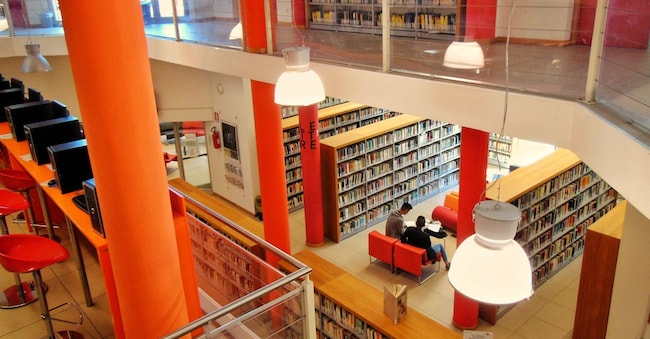
With this initiative, libraries thus become true garrisons of sustainability. In Bologna, Leila's head office is in Via Serra and the service can also be activated at the Salaborsa library, while in Florence the experimental project (which will start in the next few months and has just been presented) will concern the BiblioteCanova Isolotto, the Pietro Thouar library, the Filippo Buonarroti library and the Sustainability Office room. For both Bologna and Florence, the objective is twofold: to reduce waste production by avoiding the purchase of low-use objects, and to strengthen the sense of community through sharing. In Europe something similar exists in Berlin, but at Italia level the practice is new and confirms the focus on circular economy issues.
"I don't have to own everything I need"
"We work with third sector associations, with schools, with universities, with companies: I don't have to own everything I need," explained Antonio Beraldi, founder of Leila, presenting the project in Florence, at Palazzo Vecchio. 'We want to create a different system,' he added. 'Today if I need to use something, the only way there is is to buy it and then own it. With Leila we are trying to create an alternative system where we look more at access to goods, not purchase: there is also a saving in CO2. By the end of the year we aim to start working with the company as well". "With the Library of Objects we want to show that sustainability is not an abstract concept, but a daily practice. After the important experience in Bologna, Florence confirms its vocation as a national laboratory for the circular economy,' observed the deputy mayor of Florence, Paola Galgani. 'It is not just a matter of lending a drill or a camera, but of promoting a new model of citizenship where the value of reuse and sharing becomes common heritage, starting right from our neighbourhoods.
"We carry forward an idea of culture that is active participation and sustainability: we make the municipal libraries available as a place of encounter and exchange," added Palazzo Vecchio's Culture Councillor Giovanni Bettarini.

