
Street clashes: Vannacci proposes rubber bullets and dogs to disperse rioters
Futuro Nazionale has tabled a bill on public order, with Edoardo Ziello as the lead signatory, which was outlined at a press conference in the Chamber of Deputies. The bill provides for the deployment of military personnel, working alongside the police, with the powers of judicial police officers.

Key points
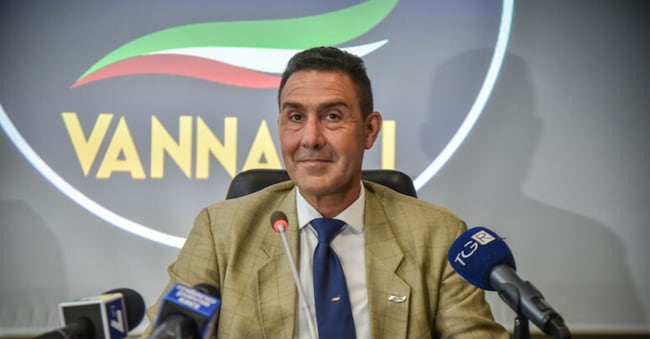
Not only military personnel working alongside the police, with the powers of judicial police officers, to restore public order, but also authorisation to use rubber bullets and dog units to disperse violent crowds, and no fewer than six years’ imprisonment for anyone caught in the act of committing ‘offences against public order’. Whilst the government is busy finalising the decree containing new measures to contain and prevent violence and street unrest such as that which occurred over the weekend in Milan, Futuro Nazionale is proposing a draconian crackdown on security. It is doing so through a draft bill on public order, sponsored by Edoardo Ziello, which was outlined at a press conference in the Chamber of Deputies by General Roberto Vannacci himself, via video link from Brussels
Vannacci: these acts of violence are terrorism; FnV takes a hard line
“Those who organise attacks on the police through paramilitary actions are bringing terrorism onto the streets. For us, this is terrorism, and for us the response must be a firm hand,” declares Vannacci, who cites as examples of measures his party intends to propose to tackle the security ‘emergency’: the introduction of fines to compensate for damage caused by violence; the strengthening of the police force with greater powers; the protection of law enforcement officers through ‘a genuine legal shield’ rather than the one proposed by the ‘right-wing’; and the revocation of citizenship for non-Italians who commit crimes.
“FnV will assess the government’s anti-violence measures if they are structural”
Vannacci, who is said to be in favour of preventive detention for minors involved in demonstrations, does not, however, rule out the possibility of voting in favour of the measures to be put forward by the government. “We will see what the government does and we will examine the individual measures, particularly the structural ones. We will assess them and, if the government puts forward measures that are in line with our proposals, we are also prepared to vote in favour of them. We hope they do not include anything we cannot accept; otherwise, it will be yet another token measure,” he states. He adds: “In addition to the programme, Futuro Nazionale is drawing up, in collaboration with the Security Department headed by lawyer Giorgio Carta, a detailed, multidimensional and feasible security plan, which will be launched in the coming days and will represent our structured contribution to addressing the issue.”
The deployment of the army with judicial powers
The draft bill, comprising seven articles, addresses ‘the urgent need to ensure the safety of citizens and the overriding interest of public order in the face of the resurgence of organised violence during public demonstrations’. Where there is ‘sufficient evidence’ that, during a demonstration or gathering in a public place, ‘acts contrary to public order and safety, violence, vandalism or concrete threats to public safety and security or to the security of the police’ may occur – as stated in Article 2 – the Prefect is obliged to order the participation and support of the Armed Forces alongside the police forces in operations to maintain and restore public order. Armed Forces personnel deployed in such operations shall, for the duration and for the purposes of the specific service, be granted the status and powers of an officer or agent of the judicial police and public security forces’.
Authorisation for the use of rubber bullets
The same article also authorises, in operations ‘aimed at dispersing, containing and neutralising violent crowds and individuals who fail to comply with orders to disperse’, the use of: ‘(a) weapons and devices for physical restraint fitted with rubber bullets or non-lethal controlled-impact ammunition; (b) specialist dog units for public order duties’.


