Enea Vademecum

Cold weather is coming: from climate control to shaded windows, here's how to save money

As of next week, systems will be switched on in the E belt, which includes many large cities in northern Italy, such as Milan, Turin, Bologna and Venice

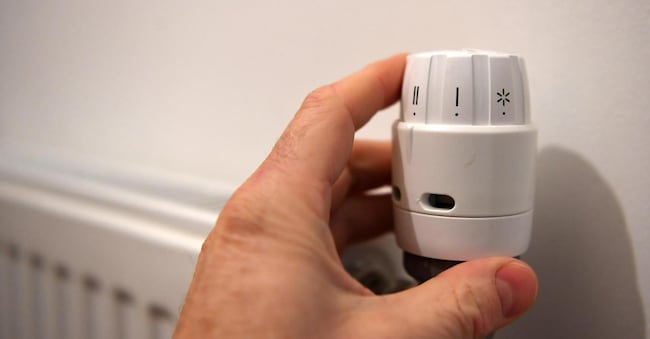
Un termosifone con la valvola che regola l’intensità.

5' min read

5' min read

Boilers and radiators will start up again as early as next week with the switch-on of systems in the E belt, which includes many large cities in northern Italy, such as Milan, Turin, Bologna and Venice.

In order to combine comfort and savings, Enea provides advice on the correct use of heating systems. First piece of advice: pay attention to the water flow temperature! Generally speaking, the heating times in the home are programmed with a chronothermostat, but this only allows you to set the temperature inside the home and not the water flow temperature in the radiators, which remains pre-set and fixed.

Loading...

Here are ten 'tips' for cost-conscious heating.

1. Combine your heating boiler with a climate control system

.

The climatic thermoregulation intervenes by means of a 'sliding' regulation on the water flow temperature to the heating system according to external climatic conditions, allowing the desired room temperature to be maintained and limiting consumption by up to 25% for every 10° C less.

"With variations in outside temperature of up to ten degrees on a daily basis, we must avoid sending water at the same temperature to the radiators all the time. The ideal solution is to combine climatic thermoregulation with the heating boiler," explains Nicolandrea Calabrese, head of the Enea Laboratory for Energy Efficiency in Buildings and Urban Development.

Climatic temperature control allows the flow temperature of the heating system to be adjusted according to external climatic conditions, maintaining the desired room temperature and limiting consumption. In practice, the lower the outside temperature, the higher the flow temperature to the radiators or radiant floor.

"This type of temperature control is crucial for condensing boilers, which work at low temperatures, but also for heat pumps, always bearing in mind that for each additional degree required we spend 2.5 per cent more energy. Since the flow rate can vary by as much as 10° C, we can limit consumption by up to 25%!" concludes Calabrese.

2. Install monitoring and control systems

Monitoring energy consumption through smart meters is essential to gain awareness of one's consumption habits and to detect leaks or malfunctions at an early stage.

3. Carry out plant maintenance

A system consumes and pollutes less when it is correctly adjusted, clean and free of lime scale. For those who do not carry out the maintenance of their system, there is a fine of 500 euro (Presidential Decree 74/2013).

4. Check room temperature and pay attention to switch-on times

.

It is first necessary to determine which of the 6 climate zones in which Italy is divided you are in: in fact, the number of maximum switch-on hours varies, by law, according to the climate zone. 19°C is enough to guarantee the necessary comfort. For every degree less, you save up to 10% on fuel consumption.

Loading...

5. Screen windows at night

Shutters and blinds or even heavy curtains reduce heat loss to the outside.

6. Do not cover radiators

Avoid placing screens in front of radiators, such as curtains or furniture, which hinder the diffusion of heat into the room. Instead, insert reflective materials between the wall and radiator: even a simple sheet of tin foil helps reduce heat loss to the outside.

7. Do not leave windows open for too long

.

It only takes a few minutes to renew the air in a room, whereas leaving windows open for too long results in unnecessary heat loss.

8. Do a home check-up

.

Choose a qualified technician to assess the efficiency of your heating system and the state of thermal insulation in walls and windows. Consumption can be reduced by up to 40%.

9. Install thermostatic valves

Mandatory by law in apartment buildings, thermostatic valves allow consumption reductions of up to 20%.

10. Choose state-of-the-art solutions

Replace the old system with a high-efficiency condensing or heat pump system and adopt chronothermostats, occupancy sensors and electronic remote controllers.

The rules

.

So far, these are the tips for saving money. But it all fits into a framework where the rules on switching systems on and off play an important role. And the rules are those outlined in two Presidential Decrees (412/1993 and 74/2013). They affect both those with independent heating and condominiums. Each municipality, however, can decide to bring forward or postpone the official dates for switching on radiators: this is because there are areas of the country where climatic conditions vary significantly.

The six climate zones

.

Italy is divided into six different climate zones that have different switch-on and switch-off dates in the individual provinces. The switching on of the heaters can take place between 15 October and 1 December 2024, depending on the zone in which one lives. Switching off, on the other hand, is scheduled between 15 March 2025 and 15 April 2025. And in particular: Zone A (includes: Lampedusa, South and Islands): radiators can be kept on from 1 December to 15 March, for a maximum of six hours a day. Zone B (includes: Agrigento, Catania, Crotone, Messina, Palermo, Reggio Calabria, Siracusa and Trapani): switched on on 1 December and switched off on 31 March. Heaters may be kept on for a maximum of eight hours a day. Zone C (includes: Bari, Benevento, Brindisi, Cagliari, Caserta, Catanzaro, Cosenza, Imperia, Latina, Lecce, Naples, Oristano, Ragusa, Salerno, Sassari and Taranto). Switch-on 15 November, switch-off 31 March. Maximum ten 10 hours per day. Zone D (includes Ascoli Piceno, Avellino, Caltanissetta, Chieti, Firenze, Foggia, Forlì, Genova, Grosseto, Isernia, La Spezia, Livorno, Lucca, Macerata, Massa Carrara, Matera, Nuoro, Pesaro, Pescara, Pisa, Pistoia, Prato, Roma, Savona, Siena, Teramo, Terni, Vibo Valentia, Viterbo). Radiators switched on on 1 November, will be switched off on 15 April. Maximum 12 hours per day. Zone E (includes: Alessandria, Aosta, Arezzo, Asti, Bergamo, Biella, Bologna, Bolzano, Brescia, Campobasso, Como, Cremona, Enna, Ferrara, Frosinone, Gorizia, L'Aquila, Lecco, Lodi, Milano, Modena, Novara, Padova, Parma, Pavia, Perugia, Piacenza, Pordenone, Potenza, Ravenna, Reggio Emilia, Rieti, Rimini, Rovigo, Sondrio, Torino, Treviso, Trieste, Udine, Varese, Venezia, Verbania, Vercelli, Verona, Vicenza). Switch-on in a few days: 15 October, switch-off on 15 April. Maximum 14 hours a day. Finally, theZone F. This includes Belluno, Cuneo and Trento. In the latter case, there is no limit either as regards the period of switching on and off, or as regards the hours of heating per day.

Maximum temperature stakes

.

What is being regulated, recalls the consumer association Assoutenti, is not only the date of switching radiators on and off, but also the minimum and maximum temperature. The rules dictate that the maximum temperature in homes must not exceed 19°C, with a tolerance of 2 degrees. In industrial or craft buildings, the temperature must be maintained at 17°C.

The condominium rules

.

Account must also be taken of the resolutions of the condominium assembly that set the hours of switching on the heaters within a specific condominium, but they must always comply with national regulations. In blocks of flats with central heating systems, the individual inhabitants can regulate their radiators independently using thermostatic valves, so as to reduce consumption and thus the expense on their bills.

Sanctions

Those who violate the provisions on the switching-on dates of heating systems risk fines of a minimum of EUR 500 and a maximum of EUR 3,000, to which may be added other fines stipulated by municipalities and local authorities.

Copyright reserved ©
Loading...

Brand connect

Loading...

Newsletter

Notizie e approfondimenti sugli avvenimenti politici, economici e finanziari.

Iscriviti