
COP31: here’s how to work towards sustainable AI
The Antalya Artificial Intelligence Pledge, calling for low-emission AI with transparent measurement, has been unveiled

Key points
Artificial intelligence is regarded as one of the key technologies of the digital transition, but its environmental impact presents an increasingly evident contradiction. The growth of data centres – which are essential for powering AI models – is placing increasing pressure on electricity grids and water resources: according to the International Energy Agency, by 2030 global electricity consumption by data centres will exceed 945 TWh, a figure equivalent to Japan’s entire current electricity demand. This scenario raises new questions about the compatibility between technological development and climate targets.
Antalya AI Pledge
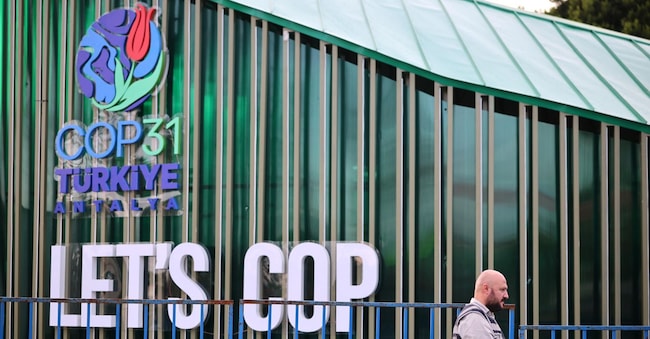
It is this contradiction that the initiative presented at COP 31 addresses. During the High-Level Green Digital Action Roundtable, organised by the Turkish Presidency in conjunction with the International Telecommunication Union (ITU), the the Antalya Artificial Intelligence Pledge. This is a voluntary, non-binding commitment, structured around four key commitments ranging from the transparent measurement of impacts to the use of low-emission energy, designed to set a new course.
The fourth commitment: AI – from problem to solution
The fourth pillar aims to turn the perspective on its head, transforming AI from a problem into a tool for climate control. The technical mechanism relies on edge computing and on-board data analysis on satellites: modern orbital constellations generate terabytes of raw data every day, which risks going unused due to transmission bottlenecks to the ground. Installing AI models directly on the satellites, however, enables images and spectral data streams to be processed in space, detecting methane leaks or thermal anomalies in real time. A concrete example highlighted recently in Antalya is Climaid, the open-source platform developed in Tanzania and winner of the AI for Climate Action Award: a system that combines machine learning, satellite observations and local data to guide adaptation plans in a country highly exposed to climate shocks and water vulnerability.
Data centres in space?
Yet the infrastructure paradox remains unresolved as long as servers remain grounded. Among the emerging prospects arising from the convergence of telecommunications and the aerospace industry is that of orbital data centres, which are the subject of the first pilot projects.
The idea, analysed in the ITU’s reports, harnesses the conditions of space – from a continuous supply of solar energy to the absence of water consumption for cooling – to power AI supercomputers. However, economic and technological barriers remain, starting with the limitations of satellite transmission compared to terrestrial fibre. Orbital data centres are still a concept under development, but they point to a possible evolution in the relationship between AI, digital infrastructure and the aerospace industry.

