
Cultural accessibility, with "Museo per tutti" Fai expands the inclusion of Italian heritage
The IQVIA survey captures organisational and information barriers that limit the cultural participation of people with intellectual disabilities.

Key points
Full participation in cultural life for people with disabilities is not a concession. But a right enshrined in Article 30 of the UN Convention on the Rights of Persons with Disabilities. Despite this, in Italy, the historical, artistic and landscape heritage remains protected.
The survey conducted by IQVIA on the topic, on the occasion of the International Day of People with Disabilities, clearly portrays the picture by involving 1,200 people from the general population, carers and professionals who assist people with intellectual disabilities. During a cultural visit, 32% of caregivers report experiencing negative feelings, related to discomfort, loneliness, lack of adequate explanations and fatigue. A perception that limits the right to full participation: more than half of carers (55%) and caregivers (57%) state that they never or almost never go to exhibitions and museums. Reasons differ: for the general public, lack of time, cost and logistical difficulties prevail. While caregivers and operators cite mainly organisational complexity (46% and 47%) and lack of information suitable for people with intellectual disabilities (25% and 12%).
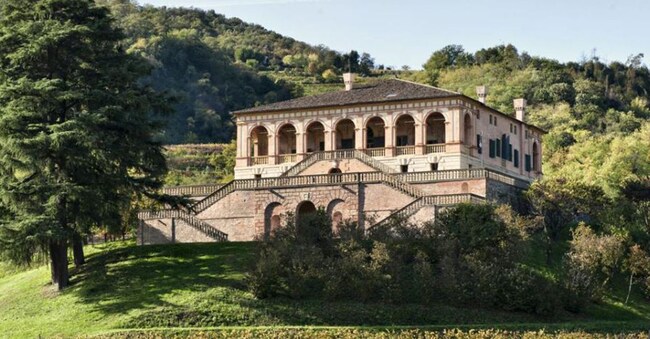
"We have a duty to design together with people, listen to their needs and make every visit experience possible, inclusive and truly welcoming," explains Carlo Riva, director of services at L'abilità onlus and creator of the 'Museum for All' project. The initiative, developed with the support of Viatris - a global company operating in the field of health -, aims to encourage the social participation of people with intellectual disabilities, facilitating their access to the world of museums and culture: a goal carried out together with Fai - Fondo per l'Ambiente Italiano ETS which, from 2016 to date, has included 16 properties in the 'Museum for All' network. "Our goal is to make the enjoyment of Fai properties as easy and complete as possible for everyone," emphasises Davide Usai, Fai general director, "This approach continues to guide our daily work.
Guaranteeing "full participation in cultural life"
From the north to the south of Italy, for each of the 16 Fai properties that are part of the "Museum for All" project, it is possible to download from the site special guides in simplified language - suitable for adults as well as children and young people - that are constantly updated thanks to an important multidisciplinary team work: these texts are written in Easy to Read language and in Caa (Alternative Augmentative Communication) symbols of Arasaac (Aragonese Centre for Augmentative and Alternative Communication) enriched with photographs, illustrations and maps.
Concrete tools that make the visit an inclusive and pleasant experience, allowing guests and their caregivers - parents, teachers, carers - to familiarise themselves with the places by learning their history, characteristics and curiosities in an engaging way. A right that is not always guaranteed today: according to the data collected in the IQVIA survey, for 79% of caregivers and 75% of operators, culture is the area in which families and persons with intellectual disabilities receive the least support. In addition to facilitating communication, with the development of special tools capable of removing the cognitive barriers that can hinder it, Museo per tutti brings to Fai places specific visit itineraries - to be carried out independently or with staff, individually or in small groups - designed with an inclusive perspective, with the idea that the skills of each person can be enhanced in a cooperative learning context.

