

Disability: it is not enough to respond to needs, let's start building pathways
The 'life project' and the caregivers' bill are the first steps towards a multidisciplinary plan that recognises the rights, wishes and potential of each individual

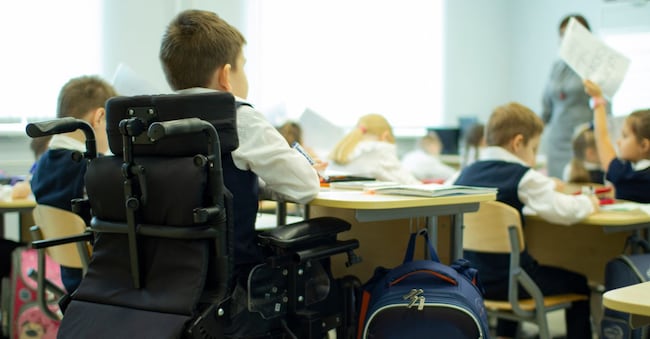
There is a question that still baffles many institutions today: what is the future we imagine for a person with disabilities? And if the answer remains tied to a list of health services, we are off track. The real leap occurs when we stop limiting ourselves to responding to needs and start building pathways. The 'life project' in fact stems precisely from this need: to restore vision, coherence and continuity to public action, placing the person at the centre and no longer the system surrounding him or her. This is one of the most significant innovations introduced by legislative decree 62/2024 and its implementation calls for health, school, social services and the world of work to work together, in unison, to build a shared, multidisciplinary plan capable of recognising the rights, desires and potential of each individual. No more fragmented and uncoordinated interventions, but an integrated approach, in which the person with disabilities becomes the protagonist of his or her own path and, indeed, of his or her own life.
The value of the "life project"
The multidimensional assessment is the starting point, because it does not just measure need, but reconstructs the complexity of a person's life. It complements the Inps 'basic assessment' - which replaces the previous multi-commission system - and abolishes periodic reviews for those with stabilised or worsening conditions. Two changes that, together, simplify procedures, reduce the bureaucratic burden on families and put an end to a compartmentalised and humiliating view of disability. The life project, therefore, is precisely a response to the fragmentation that for years has separated disability, school, rehabilitation, and aims to unite what for years has been thought of as watertight compartments. But to really work and not remain just a reform 'on paper' it needs clear operational tools, stable teams and lots of training. And above all, it requires a new administrative culture, capable of knowing how to accompany and not just manage; because a law, to become a reality, needs prepared people and strong governance. This transformation, if made concrete and immediately operational, could have a profound effect on the country's development. Because investing in customised pathways means activating skills, generating work, enhancing proximity, promoting full citizenship. Inclusion is not a cost: it is a resource that produces social ties, economic impact and innovation in welfare. In this sense, therefore, the life project is a policy of growth as well as of justice.
Saving and recognising the role of the caregiver
The bill currently under discussion on the recognition of family caregivers is also on the same horizon. For the first time, a path of legal protection is being set in motion for millions of people who provide essential care and who often do so alone. It is not a question of replacing family care, but of recognising and supporting it by safeguarding the value of those who choose to remain beside their loved ones. The current text has its limitations - very low ISEE thresholds and a limited number of people - but it nevertheless marks a turning point that is doubly linked to the life project, indicating the overcoming of an emergency logic and the entry into a model based on the participation and autonomy of each person. No longer a system that 'intervenes when needed', but one that accompanies throughout life. But in order to hold up, this system needs stable resources, political continuity and a national direction capable of guaranteeing equity while avoiding territorial inequalities.
The World Day of Persons with Disabilities on 3 December is not a mere celebration, but an opportunity to renew the commitment to a more just and far-sighted vision. Because the life project, if really put at the centre of policies, can become the key to restore perspective, dignity and participation to so many people. And it is also one of the most concrete indicators of the maturity of a country that also wants to grow through inclusion.
*President of the Seraphic Institute of Assisi

