Retail trade

District markets at risk of closure if services are not improved

The turnover of sales in public areas has lost 4 billion in ten years and operators are down by 17%. Pallottini of Italmercati: timetables and products offered need to be updated to overcome difficulties

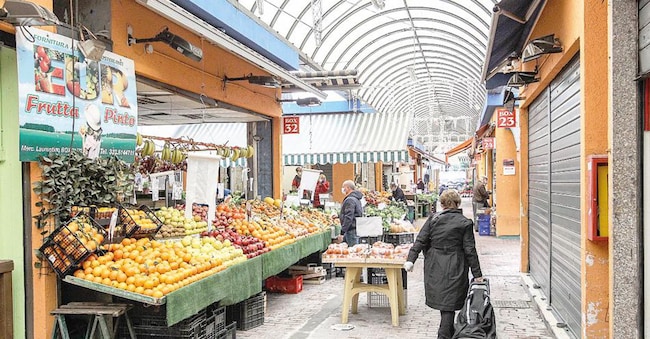
by Giorgio dell'Orefice

4' min read

Translated by AI
Versione italiana

4' min read

Translated by AI
Versione italiana

A mine to be discovered and exploited, which instead currently seems to be being abandoned. In Italy there are approximately 7 thousand local food markets where approximately 150 thousand companies now operate, compared to 180 thousand ten years ago (-17%). With the turnover of commerce in public areas that, according to Italmercati estimates based on data from trade associations, amounts to 15 billion compared to 19 billion ten years ago (-21%).

Structures that are in many cases old, strongly integrated into the neighbourhoods of small and large cities and often, with a few exceptions, in decay. And not for the quality of their fresh and very fresh products, which is not in question. But because of their inadequacy to the rhythms of Italian families and the service content that consumers now increasingly seek in food products.

Loading...

It is on the basis of these considerations that Italmercati, the network of wholesale markets in Italy (22 structures in all major cities of the country with an aggregate turnover of the 4,000 companies working in them of 11 billion euro, 26,000 employees and an average of 7 million tonnes of products handled), has launched a major project to relaunch and enhance the value of Italy's local markets.

"The starting point of our reflection and therefore of our project," explained the president of Italmercati, Fabio Massimo Pallottini, "is also another. According to a recent Censis survey, 63.5% of Italians consider fresh food healthier and 47.8% consider it tastier than processed products. And with this in mind, why not promote and valorise that real reservoir of fresh products that are the markets?".

Italmercati aims to make available the wealth of experience accumulated in ten years of managing wholesale facilities, facilities that ten years ago, in addition to being five as opposed to 22 today, were in difficulty. Now, instead, they are all in profit and are also the recipients of over 600 million in investments (of public and private resources, of which 200 million come from the NRP) on their further modernisation. "Structures that, moreover," Pallottini adds, "beyond their size, share many of the criticalities and problems with smaller markets.

And this is because the management of fresh and very fresh products - from the leading segment that is fruit and vegetables to meat and fish products - requires consolidated expertise in the management of logistics, the cold chain, hygiene of locations, transport and deliveries. 'We are facing a major challenge,' the president of Italmercati goes on to explain, 'in which the 'big sick person' is the retail trade. And in this area the small district markets are in great difficulty, as they are in danger of disappearing'.

When talking about the revitalisation and enhancement of local markets, many people think ofthe experiences of Barcelona or Paris, which have long since become established tourist destinations. 'Some can repeat that path in Italy too,' says Pallottini, 'I am thinking of cities like Rome, Milan, Florence, Bologna. But tourism is not our target. Instead, we want to strengthen the frequency of Italian consumers, of families. And to do this we need a quality leap in management, in management. Today, on the other hand, local markets are still managed according to municipal rules that are often outdated and no longer adapted to reality. The spaces are still entrusted on the basis of calls for tenders and then no one checks whether the assignees actually start their activities or not'.

According to the Italmercati project, the cornerstone of the management of district markets must become the service content for the consumer. "Without in any way detracting from the street food experiences in markets," explains Pallottini, "but when we talk about service we think first of all about flexibility in opening hours. Today the markets are mainly open in the morning and are therefore frequented mainly by pensioners. People who work would need extended hours. Let them be open in the afternoon. And theafternoon opening requires extra staff but also new supply slots because the goods put on sale in the morning are likely to be sold out by lunchtime'.

But service content mainly concerns the type of goods offered for sale. "What is to prevent vegetables already cleaned and washed or fish products already filleted, cleaned or offered in hamburger form from being offered for sale? There is a range of possibilities to be explored in terms of preparations and ready meals which, if offered, could change the relationship of district markets with the public but also with the audience of small restaurants and perhaps even large retailers. And then, once the opening hours have been extended, making the markets accessible to a wider audience, it is essential to organise a single home delivery service even if a consumer has purchased several products at different stalls. It sounds trivial but nobody has thought of it yet'.

Copyright reserved ©
Loading...

Brand connect

Loading...

Newsletter

Notizie e approfondimenti sugli avvenimenti politici, economici e finanziari.

Iscriviti