
Rhine Group: Draghi and Collison (Stripe) bring together experts to revitalise European competitiveness and innovation
Mario Draghi and Patrick Collison are bringing together economists, entrepreneurs, academics and key figures from European politics. A new multidisciplinary group aims to turn economic analysis into concrete reforms to strengthen Europe’s global position in technological and strategic sectors.

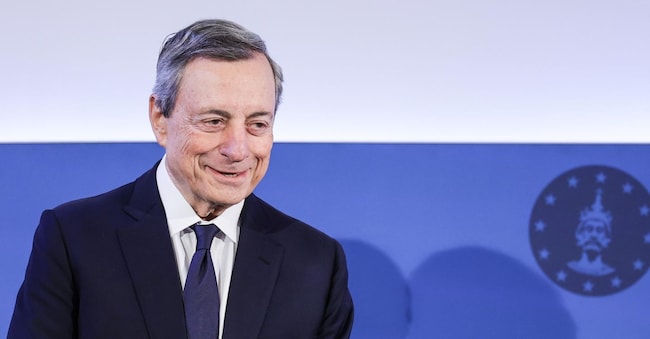
Mario Draghi and Patrick Collison are bringing together economists, entrepreneurs, academics and key figures in European politics. The aim is to transform the assessment set out in the Draghi report on competitiveness into a concrete reform agenda. The group also includes a sizeable Italian contingent, ranging from Andrea Pignataro to Lucrezia Reichlin, and from Francesco Giavazzi to Francesco Decarolis.
It is called the Rhine Group and is a new initiative launched in August 2026 to tackle what Mario Draghi now considers to be Europe’s central problem: the loss of competitiveness, productivity and capacity for innovation in a world that has become much harsher.
It was founded by two figures who appear to be worlds apart, yet are united by the same concern: Mario Draghi, the economist who led the European Central Bank during the euro crisis and who, in 2024, authored the European Commission’s report on competitiveness, and Patrick Collison, co-founder and chief executive of Stripe, one of the tech entrepreneurs most interested in the relationship between innovation, science and growth. The two are co-chairs.
The group is led in practical terms by Luis Garicano, a Spanish economist and former MEP. The starting point is a finding that is far from reassuring.
A question of economic power and sovereignty
According to the Rhine Group, only four of the world’s fifty largest technology companies are European. And in virtually all the technology sectors set to shape the coming decades – from artificial intelligence to new platforms, and from scientific research to emerging technologies – the continent is starting from a position of weakness. In the view of the organisers, this is not merely a question of industrial prestige.

