Commission

Drinking water, EU starts infringement proceedings against Italia

Meanwhile, Ispra published the Report 'The State of Water in Italia - Towards the 4th management cycle', which photographs the state of national water bodies for the achievement of environmental quality objectives

by Davide Madeddu

Adobestock

3' min read

Translated by AI
Versione italiana

3' min read

Translated by AI
Versione italiana

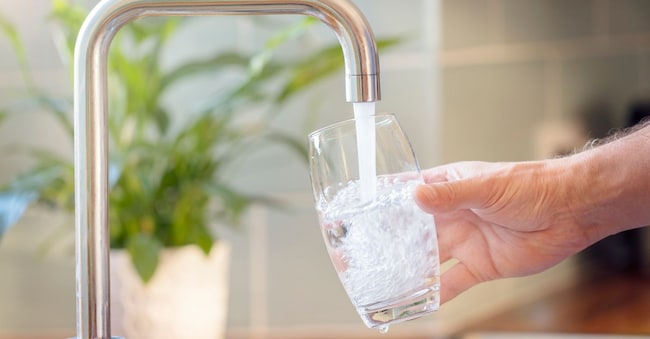
The EU Drinking Water Directive, which provides forstricter measures on water quality and safety, has allegedly not been transposed correctly. For this reason, the European Commission has decided to initiate infringement proceedings against Italia.

This was announced by the EU executive, which also explained that the transposition of the directive into national law 'still has several shortcomings'.

Loading...

From risks to obligations

Among the reasons would also be the 'limitation of the scope of the risk assessment of domestic distribution systems, the postponement of certain obligations, the lack of the obligation to inform vulnerable persons on how to access drinking water, to limit derogations only to duly justified circumstances and to the shortest possible period'.

Italy now has two months to reply and remedy the shortcomings pointed out by the Commission, which, in the absence of a satisfactory response, may decide to issue a reasoned opinion, continuing the infringement procedure.

The Ispra report

An up-to-date picture of the state of water in Italia, meanwhile, comes from Ispra (Higher Institute for Environmental Protection and Research), which published the Report 'The State of Water in Italy - Towards the 4th management cycle'.

A picture emerges from the study that needs to be improved.

Out of a total of more than 7,700 surface water bodies, consisting of rivers, lakes, marine-coastal and transitional waters, 43.6 per cent are in good or better ecological potential status, while slightly more than75 per cent are in good chemical status.

The situation improves when groundwater is analysed: 'out of a total of 1,007 water bodies, almost 80 per cent are in good quantitative status, while 70 per cent are in good chemical status.

Positive signs but must accelerate

"The Report on the state of our waters confirms positive signals, but also highlights how urgent it is to speed up the achievement of our water quality objectives," emphasises Maria Alessandra Gallone, president of Ispra and Snpa (National Environmental Protection System).

Water is a national priority and a strategic lever for the environment, health and economy; it is crucial to reduce pressures, especially diffuse pressures, and to strengthen integrated and sustainable management of the resource.

In a context of climate change, investing in prevention and monitoring is no longer an option, but a shared responsibility. Water is our most precious commodity and protecting its health means protecting ours too'.

The health of rivers

The report points out that 'most of the surface water bodies in high status* fall within the Sardinia district and consist predominantly of marine-coastal (44%) and transitional (10%) waters'.

Not only that: 'The highest percentages of rivers in good ecological potential status are recorded in Sardinia 76% of river water bodies in the district,' the report continues, 'followed by the districts of the Eastern Alps and Central Apennines for both, 43%'.

Then there are the so-called pressures on the water resource resulting from anthropisation, agriculture but also urban discharges and hydraulic defence works.

A strategic choice for the country

"In a rapidly evolving climate and economic and social development context," the report goes on to emphasise, "integrated and sustainable water management is not only an environmental priority, but a strategic choice for the country's future.

Brand connect

Loading...

Newsletter

Notizie e approfondimenti sugli avvenimenti politici, economici e finanziari.

Iscriviti