The report of the Ministry of the Environment

Consumption: from electricity to petrol, here is how much a family spends per year

The snapshot of consumption and expenditure comes from the National Energy Situation Report 2024 prepared by the Ministry of the Environment and Energy Security

by Celestina Dominelli

5' min read

5' min read

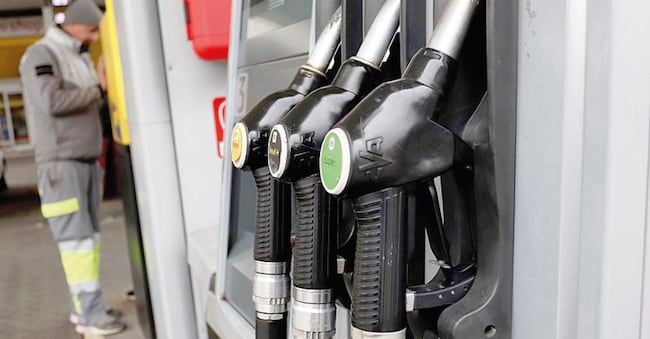
In 2023 in Italy the energy expenditure of the typical household amounts to approximately EUR 4 thousand (a decrease of about EUR 1 thousand compared to 2022, i.e. -20%) and is attributable for 46% to the purchase of fuels (increase in expenditure of EUR 15), for 33% to the gas bill (reduction of EUR 576) and for 22% to the electricity bill (reduction of EUR 445). In the same year, the typical family contributed EUR 81, or 2 per cent of its total energy expenditure, to the promotion of sustainability. This is what emerges from the Report on the National Energy Situation in 2024, prepared by the Ministry for the Environment and Energy Security and which contains a detailed cross-section of expenditure trends among different types of households.

The consumption of a typical family

.

According to the study, in Italy, in one year, a typical family consumes around 1,400 cubic metres of natural gas and 2,700 kilowatt hours of electricity for the energy needs of its home, and around 1,000 litres of fuel to travel by its means of transport. These consumption levels fairly accurately represent the energy footprint of a four-member household, which resides in a dwelling in climate zone E (where 47% of the country's permanently occupied dwellings are located), uses natural gas for heating, domestic hot water and cooking, and has private means of transport with which it travels about 15,000 per year. In recent years, the energy consumption expenditure of a typical family has fluctuated around 3 thousand euros per year (1,300 €/tep), or about 10 per cent of the average ISTAT family income.

Loading...
Bollette, sempre più telefonate aggressive: come difendersi dai raggiri

System charges

.

The system charges in the electricity bill for the promotion of electricity renewables (Asos) and energy efficiency (AUC7RIM, ARIM's share) resulted in an expenditure of EUR 52 for the typical household in 2023, compared to zero in 2022 and EUR 64 in 2021. The cancellation of system charges to mitigate bill increases was extended until the first quarter of 2023. The charges in the gas bill (in particular the RE and RET tariff components) allocated to the promotion of thermal renewables and energy efficiency (through the White Certificates and the Conto Termico mechanisms) were also nil in 2023, as in 2022.

Resources for Sustainability

.

Sustainability resources taken from fuel sales are not covered by a regulated tariff, however, biofuel blending obligations entail additional costs that are to some extent internalised in the final price of compulsory fuels (petrol and diesel). The total cost of the mechanisms for promoting renewables in transport is estimated at around EUR 1.1 billion, which should weigh on the annual expenditure of a typical household on transport by around EUR 30, in line with the previous year.

Existing variations

.

The typical household is an important reference case in the country, but not entirely representative of the entire population. According to the Mase report, there are in fact non-negligible variations in consumption, influenced by the number of household members, climatic conditions, consumption habits and alternative technologies and energy sources available. In addition, the different prices of energy raw materials, the progressivity of some tariff and tax components, the incidence of fixed costs, and the different levels of charges and taxes applied to the various energy products make energy expenditure non-univocal for the same needs and not always linear as consumption varies.

The electricity bill

.

The electricity bill for resident households with consumption between 1,500 and 5,000 kilowatt hours varies, in terms of expenditure, fairly linearly with consumption with a unit cost of between 32 and 36 euro cents per kilowatt hour. For non-resident users with low consumption (e.g. second homes) the unit cost exceeds 50 euro cents per kilowatt-hour. In terms of tariff components, the energy material quota came to weigh almost 70 per cent of the final energy price, system charges were only applied in three of the 2023 quarter due to the prolongation of the extraordinary regulatory interventions aimed at mitigating bill increases, while taxes, although decreasing, remained high due to VAT revenues.

Bollette, dagli spot ai controlli: faro Arera sulle forniture luce e gas

The impact of geographic location and climate on the gas bill

.

For households that use natural gas for cooking, domestic hot water and heating through an autonomous system, the main factor affecting gas bills is clearly the geographical and climatic location, which strongly determines consumption for heating (assumed to be 1100 cubic metres in zone E, 700 cubic metres in Rome, 300 cubic metres in Palermo to which is added the part for cooking and domestic hot water assumed to be constant over the territory and equal to 300 cubic metres). Gas bills show a considerable expenditure differential over the national territory, partly calmed by lower unitary transport tariffs in the north of the country and fixed costs that have a greater impact on low-consumption users. Taxation in gas bills covers an important share of the final expenditure (in the order of 20% in 2022 and 2023 due to the reduction of VAT revenue to 5% compared to 10% and 22% depending on the consumption bracket in previous years) that is not homogeneous on the national territory (due to the different regional surtaxes applied) and depends on consumption (excise duties and progressive surtaxes). In 2023, the final unit cost had a significant reduction compared to the year before, the expenditure on energy reduced by 40%. In addition, through a series of regulatory provisions aimed at mitigating final bill costs, system charges were made negative and VAT rates reduced.

Fuel expenditure

.

Expenditure on fuel in private household transport depends on the mileage (km/year), the type of vehicle and its power and fuel supply, which affects specific consumption levels and the prices charged for refuelling. Using the average consumption of the circulating fleet by fuel type and the final consumer prices, annual refuelling expenditures were simulated and compared for a mileage in line with the average circulating fleet (11 thousand kilometres per yearo) in the period 2016-22. Comparing the refuelling expenditure of 2023 with that of 2022, a significant reduction in the expenditure for refuelling from natural gas and electricity from domestic recharging emerges due to the reduction in raw material prices, while refuelling from public recharging with the reinstatement of the charges cancelled on a transitional basis until the first quarter of 2023 (particularly relevant for this type of user) had a more moderate reduction. With regard to petroleum products, petrol-fuelled vehicles increased slightly, while LPG and diesel cars decreased slightly.

The burden of taxation

.

The unit costs of the different fuelling types range in 2023 from 5.1 euro cents per kilometre for LPG to 12.7 euro cents/km for petrol vehicles. Decisive is the tax and parafiscal component applied heterogeneously on the different energy carriers, without which, for example, even LPG would have costs comparable to other cars with traditional fuels. For electric cars, it is necessary to point out a considerable variability of recharging costs (even greater than 100 per cent) on the basis of home recharging or from a public recharging station, which in turn can differ even further on the basis of the supplier, the type of recharging (low/quick/fast) and the type of subscription (flat/ consumption).

Copyright reserved ©
Loading...

Brand connect

Loading...

Newsletter

Notizie e approfondimenti sugli avvenimenti politici, economici e finanziari.

Iscriviti