
Energy, cars, simplifications: Meloni's agenda for the European summit
In the 'non-paper' of Italia, Germany and Belgium the anti-bureaucracy emergency brake. The axis with Merz. Reform of Ets and Cbam to reduce energy costs for industry

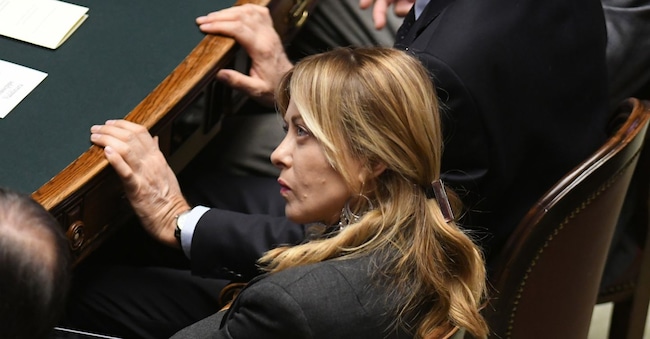
Giorgia Meloni arrives this morning at the Alden Biesen castle for the co-chaired pre-summit with Friedrich Merz's Germany with a list of proposals and a goal: to convince the European partners (17 of them have accepted the invitation, including Emmanuel Macron's France) to share 'concrete measures' on three sectors that she considers priorities for the European shot. Energy, automotive and simplification. The package has been filed down to the last, but the premier is determined to seize the opportunity of the alliance with the Germans to push for effective solutions ahead of the European Council of 19-20 March.
The non-papers of Italia, Germany and Belgium
The 'non-paper', drawn up by Italia and Germany with the support of Belgium on the eve of the informal summit on competitiveness, also cuts to the chase: it does not mention, for example, the insidious topic of investment plans to be financed with the common debt. Macron's recipe to which Merz had promptly closed yesterday received an unexpected assist from Bundesbank president Joachim Nagel in an interview with Politico. Meloni prefers not to interfere (and not to upset the axis with the chancellor). At the same distance she keeps the topic of 'Buy European' protectionism in Macronian sauce. Nor does she now want to insert herself into a debate on European governance, the goodbye to unanimity and enhanced cooperation.
The 'emergency brake'
Even if yesterday the passage in the document by Italia, Germany and Belgium that envisages an 'emergency brake' was discussed: the request to introduce a control by the individual governments on the Commission's proposals, with a mechanism designed to allow them to 'block excessive bureaucratic burdens that emerge during the legislative process, for example by activating them at the request of a member state'. A point dear above all to Berlin, on which Italian diplomatic sources soften, recalling that "the objective for Rome today is only one: to put concrete initiatives for growth and competitiveness on the ground". But it certainly conceals one of Meloni and Merz's main strategic objectives: to transform the enhanced cooperation envisaged by the Treaties (and ventilated by Ursula von der Leyen herself, who will also be present at the pre-summit) into cooperation between states, in the sphere of a variable-geometry Europe.
The reform of Ets and Cbam
The turnaround for competitiveness that Italia advocates is in black and white. The intervention that Meloni considers most urgent is the lowering of costs that burden industries, starting with energy costs. As anticipated yesterday in Il Sole 24 Ore, Italia will plead for a reform of the ETS - the European Emissions Trading Scheme, launched over ten years ago by the EU to reduce greenhouse gas emissions and due for review in the third quarter of the year - that does not damage revenue for states, but makes companies more competitive. At the same time, he will insist on the need to change the Cbam (Carbon Border Adjustment Mechanism) to protect the competitiveness of energy-intensive and steel industries. A solicitation that Meloni had already reiterated in recent months, in the context of a criticism of the Green Deal and the "ideological and self-defeating approaches" that, in her opinion, risk causing the "industrial desertification" of the Old Continent. The premier's thrust, in perfect harmony with Merz and still in the wake of the no to 'green dogmatisms', will also come in the full implementation of the principle of technological neutrality in the automotive sector with a view to restoring a medium-term industrial projection to the sector.
Italian prudence
In the Italian delegation, however, there is caution about the outcome of the summit: 'We have to listen carefully to the reports by Mario Draghi and Enrico Letta and understand how the discussion will go. The positions are different'. But awareness of the 'existential challenge' for the European economy is widespread, as is that of the stone guests: China and the United States. And even on the front of relations with Donald Trump Meloni and Merz travel far from Macron. In Italia, the oppositions are in the trenches. But even former prime minister and senator for life Mario Monti, from the pages of the Financial Times, warned: 'Rome and Berlin are fragmenting the single market. Their recipe aims at consensus, not competitiveness'.


