
Electric cars, EU and US tariffs drive Chinese to Emerging Markets
Chinese manufacturers look to markets such as Thailand and Brazil to avoid tariff costs. This strategy entails several risks
4' min read
Key points
4' min read
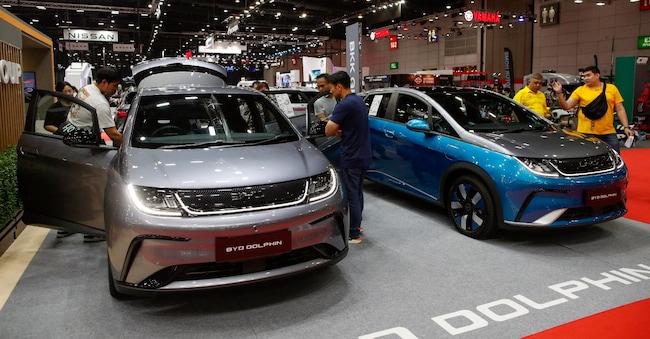
Chinese manufacturers of electric vehicles are rapidly adapting their strategies to cope with the duties imposed by the US and Europe (two days ago also by Canada). How? By directing their exports towards the emerging markets of Asia (Thailand, Indonesia), Central and South America (Mexico, Brazil) and the Middle East (United Arab Emirates). This change of strategy is already evident in the available data but, according to a Moody's report, involves at least four types of risks: geopolitical, execution and cost, market suitability and regulatory.
Tariffs are a response to the growing flood wave of Chinese electric vehicles. An investigation by the European Commission conducted between October 2023 and June 2024 pointed out that ever-increasing production has been supported over the past decade by massive state subsidies, estimated by a US think tank at more than $230 billion. These subsidies make Chinese vehicle prices much more competitive (around 30 per cent) on global markets, threatening the market share of Western manufacturers and resulting job cuts. In May 2024, the US imposed duties of 102%. In July, the EU, which already applied a 10% duty, introduced preliminary duties, which were further rectified on 20 August with rates ranging from 9% to 36.3%. The European Commission is expected to finalise these duties by 30 October 2024.
In addition to tariff increases, both the US and the EU have implemented other policies to limit China's growing influence on the global supply chain of electric vehicles and the clean technology sector. These barriers are likely to remain, the rating agency argues, especially considering that the Chinese government is increasingly focusing on an export-oriented growth strategy for manufacturing goods in the face of weak domestic demand. Moody's predicts that this trend will exacerbate trade tensions between China and the West.
Chinese electric cars, overtaking Europe
.But the surprising fact of Moody's report, dated 26 August, is that during the first half of 2024, emerging markets overtook the European Union as the main destination for Chinese exports of battery electric vehicles and plug-in hybrids (Nev ornew energy vehicles is the expression used in China). According to Chinese customs data, China's Nev exports grew by 26% year-on-year to about one million units, an increase of about 207,000 units. This growth was mainly driven by an increase of about 263,000 units in emerging markets, offsetting a decline of about 56,000 units in other regions.
Emerging Asia's share (Thailand, Indonesia, Malaysia, in that order) in China's Nev exports is around 22%, while Latin America and the Middle East (UAE, with Israel already playing a significant role) account for 19% and 11% respectively. The share of the European Union dropped significantly, from 37.5% in 2023 to 23.5% in 2024. Among individual countries, Brazil (where 78% of the electric market is already dominated by the Chinese) and Mexico led the overall growth in electric car imports, followed by the United Arab Emirates and Indonesia. Large markets such as India and Turkey are also part of the picture.


