
Solar and wind power: the EU Commission presents the T-Med project with the Maghreb and Mediterranean countries
The European Commission’s aim remains to reduce the European Union’s dependence on fossil fuels, with a view to achieving climate neutrality by 2050
From our correspondent Beda Romano
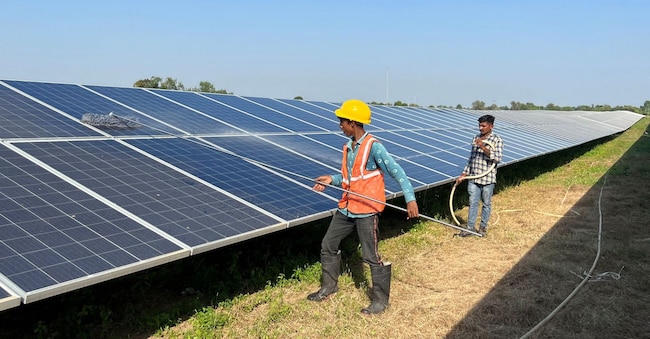
BRUSSELS – Almost twenty years after an initial, arguably premature, attempt, the European Commission today, Tuesday 9 June, presented a proposal for cooperation with Mediterranean countries in the field of renewable energy. The EU executive’s aim remains to reduce the European Union’s dependence on fossil fuels, pursuing climate neutrality by 2050. The T-MED project is based on a public-private partnership.
“The Mediterranean region,” explained Dubravka Šuica, the Commissioner for the Mediterranean, “has enormous untapped potential for renewable energy sources – 2,300 gigawatts, more than double the European Union’s current capacity – with solar and wind energy costs 30–40% lower than in Europe (…) The region has the potential to become one of the world’s leading centres for renewable energy and clean technologies.”
Five billion euros in guarantees
In practice, the European Commission intends to make €5 billion available in guarantees, with the aim of mobilising up to €25 billion by the middle of the next decade. Brussels explains: ‘By 2035, the initiative is expected to contribute to the development of 15 gigawatts of new capacity in the renewable energy sector, support regulatory reforms in partner countries and help create over 100,000 jobs in the clean energy sectors’.
Previous attempts
This is not the first time that Europe has attempted to harness the Maghreb and the countries of the Mediterranean basin to generate solar or wind power. In the first decade of this century, a group of German companies developed the Desertec project. The initiative met with limited success. Here in Brussels today, there is hope that the new project will prove more effective, helping to reduce dependence on fossil fuels.
The latest on public support
EU officials explain that, unlike Desertec, the T-MED initiative enjoys public support. They also note that, in the meantime, the costs of wind and solar energy production have fallen; southern countries have made economic and technical progress; and finally, there is growing interest from Italia and Spain, at the forefront on the northern shores of the Mediterranean basin, given the current high economic and environmental costs of fossil fuels.


