Registrations

Cars, European market up 12% in April

In the month of April 2024, 1,080,913 cars were registered in Europe (EU+Efta+UK), an increase of 12% compared to the same month a year ago. This was reported by Acea

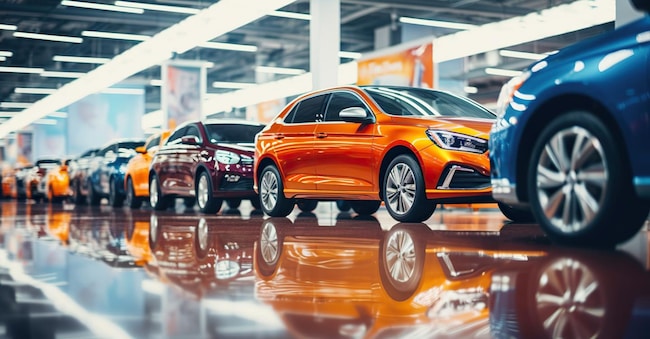
(AdobeStock)

4' min read

4' min read

In the month of April 2024, 1,080,913 cars were registered in Europe (EU+Efta+UK), up 12% compared to the same month a year ago. This was reported by Acea, specifying that in the EU alone, registrations increased by 13.7% to 913,995 units, thanks to the positive performance of the main markets: Spain (+23.1%), Germany (+19.8%), France (+10.9%), and Italy (+7.7%). The growth, according to Acea, is also partly due to the fact that there were two more working days in April 2024 than in April 2023.

In the EU+Efta+Uk area, registrations of electric cars increased by 14.4% to 144,656 units. The only powertrain type that declined was diesel (-0.8% to 124,943 units), while the best performance came from hybrid cars (+29.1% to 318,854 units).

Loading...

In the first four months of the year, registrations in Europe amounted to 4,476,369, up 6.5% from 4,201,904 units in January-April 2023.

In the month of April 2024, the Stellantis Group registered 166,534 cars in Europe (EU+Efta+UK), down 1.5% compared to the same month a year ago. The market share dropped to 15.4% from 17.4%. In the first four months of the year, registrations in the region totalled 764,604, up 2.9% year-on-year, with market share down to 17.1% from 17.7%. This is according to Acea.

The Stellantis Group remains second in market share in Europe, behind the Volkswagen Group and ahead of Renaul. In the European Union alone, Stellantis registrations were 152,236, up 1.7% from April 2023, with share increasing to 16.7% from 18.6%. In the January-April period, EU registrations were 676,411, up 2.3% year-on-year, and share increased to 18.4% from 19.1%.

Looking in detail at the Acea data for April 2024, in the European Union electric cars had a market share of around 12% (almost stable), with hybrids up 29.1% from 24.9%. Diesel and petrol cars lost the majority of the market, with April's share dropping to 48.9% from 52.8%.

Specifically, in the EU, electric car registrations in April amounted to 108,552 (+14.8%). France and Belgium drove the market with an increase of 45.2 % and 41.6 % respectively. While Germany - Europe's largest market - remained more or less stable (-0.2%). From January to April, 441,992 electric cars were registered, up 6.4% compared to the same period in 2024. In April, 265,992 hybrid cars were registered in the EU, up 33.1% year-on-year, with a share of 29.1% (up from 24.9% in April 2023).

The markets with the highest growth for this segment were France (+48.1%), Spain (+38.5%), Germany (+25.9%) and Italy (+22.8%). Plug-in hybrids recorded a more modest increase in registrations (+3.7%), with a 6.8% share at 62,148 units. Germany's performance saved the segment (+28.4%), with France stable (-0.1%).

Looking at traditional engines, in the EU, petrol cars recorded 328,967 registrations (+7.3%), with Spain +24.1%, Germany +18.6% and Italy +14.1%. Market share, however, dropped to 36% from 38.1% a year ago. Diesel cars, which account for 13% of the market, remained almost static at 118 thousand units. Despite the decline in large markets such as Italy (-21.1%), Spain (-19.3%) and France (-18.15), in Germany they recorded +28.2%.

Promotor: 'Europe's car market crisis not yet overcome'

"The double-digit increase in the European market in April is largely due to the higher number of days worked in most countries in the area as a result of the early Easter at the end of March," points out Centro Studi Promotor, which also highlights the 18.5% drop compared to the pre-crisis level (January-April 2019). "The crisis of the car market in Western Europe, which began with the pandemic and continued with the shortage of components for car production, with the return of inflation and with the effects of the energy transition, which led to a shortage of supply on the market, in particular of the cars most accessible to the mass of potential Italian buyers, effectively paving the way for the penetration of Chinese products", is therefore not yet over, explains the Csp.

The SPC notes that "the share of electric car registrations in Western Europe fell from 21.7 per cent in August 2023 to 13.4 per cent in April, with a particularly difficult situation in Italy, where the share that had reached 5.1 per cent in August 2023 fell to 2.4 per cent. The reasons for the slowdown in the electric car market are to be found in the incentive issues and in the fact that, in some markets such as the UK, demand for pure electric cars (Bev) comes mainly from fleets, while demand from private individuals is strongly hindered, not only by prices, but also by growing concerns about the flexibility of electric cars'.

"Given this situation, it is quite clear that one of the priority tasks of the new governance of the European Union, after the upcoming elections, will be to get to grips with the dossier on energy transition in the car industry. And this also in view of the fact that energy transition is also being blamed for the opening up of very interesting (but for employment and the European economy worrying) prospects for the massive penetration of the European market by Chinese cars,' comments Gian Primo Quagliano, chairman of Centro Studi Promotor.

Copyright reserved ©
Loading...

Brand connect

Loading...

Newsletter

Notizie e approfondimenti sugli avvenimenti politici, economici e finanziari.

Iscriviti