
Speedy evictions and a commissioner for social housing, the novelties of the Housing Plan
First elements emerge on the package of measures expected in the Council of Ministers on Thursday

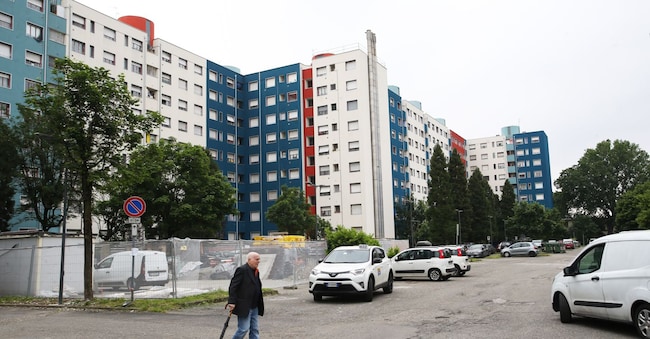
A commissioner to lead the operation to adapt the 61,000 uninhabitable council houses scattered all over Italia.v And a bill on fast evictions, to free up occupied properties, starting with the 22,000 council houses currently illegally blocked.vThese are the novelties arriving from the technical tables that the executive is carrying out in these hours to finalise the Housing Plan, expected in theCouncil of Ministers meeting on Thursday 30 April. vThe work of filing hinges on three novelties that could take shape in a package of two decree-laws and a bill. But let us go in order.
Social housing, the commissioner arrives
The first pillar will concernpublic housing and will be included in a decree law. The available funds (the approximately 970 million also mentioned in the Public Finance Document) will be used both for the renovation of uninhabitable social housing and for the construction of new social housing in some large cities. A commissioner will be appointed to carry out this dossier and a management committee will be set up in which regions and municipalities will participate, through the Anci.
Simplifications for social housing
A second group of measures, also approved by decree, will concern social housing. Here a package of administrative simplifications will be introduced to speed up the implementation of projects. And a model will be defined for the establishment of investment funds, co-participated by public and private entities. The funds will be led by a managing commissioner. Under this umbrella, Cassa depositi prestiti could be involved.
A Bill on speedy evictions
The third element will concern evictions. The issue of speedy evictions and simplified enforcement rules, which the Quirinal had asked to be decoupled from the other measures, is back on track. They will be included in a bill, which will probably look, although the measures are not yet known, at what the majority had already tried to do in recent months, starting with the Buonguerrieri bill, proposed to the Chamber by the deputy of Fratelli d'Italia.
Resources
The coverage has been identified, but the perimeter remains in flux. An initial basis is there: the 970 million lined up by the MIT with the last three budget laws, earmarked for public housing. Inside there are 100 million from the 2023 manoeuvre for innovative models of social Erp (2027-2028), 560 million from the 2024 law to finance the Plan between 2028 and 2030, and another 310 million inserted with the 2025 manoeuvre as refinancing, with a distribution starting as early as 2026. However, these numbers alone are not enough to cover the Plan's vast horizon. The dossier is therefore destined to expand. The resources of the mid-term review of the cohesion funds will also come into play, with more than 1.1 billion more earmarked for housing policies, the result of the agreement in the State-Regions Conference. Also on the table is the Climate Fund, with a possible allocation of almost 3 billion for energy requalification interventions. A channel that, if confirmed, would also intercept public assets, linking the House Plan to the objectives of transition and consumption containment.


