
Innovation

Fighting obesity, new drugs now look beyond the scales

Studies presented at Echo 2026 in Istanbul show that the topic is no longer just losing weight: the focus shifts to maintenance and the effects of therapies on related diseases

by Francesca Cerati

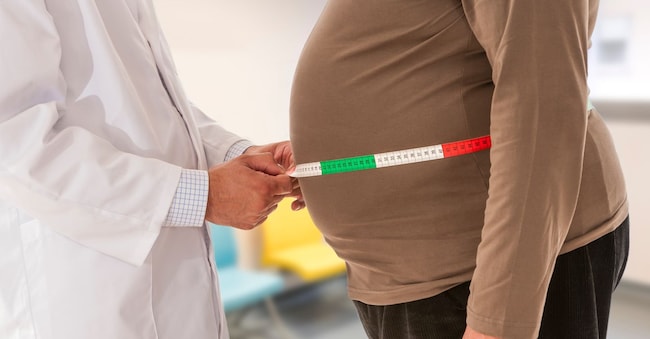
Doctor measuring obese man waist body fat. Obesity and weight to loose. JPC-PROD - stock.adobe.com

4' min read

Translated by AI
Versione italiana

4' min read

Translated by AI
Versione italiana

It is no longer the weight loss that is the news. It is what happens next. The trajectory of anti-obesity drugs is changing rapidly, and the European Congress on Obesity (Eco26) in Istanbul made clear a phase shift: from results on weight loss to chronic management of the disease and its complications. Against this backdrop, the scientific competition between Eli Lilly and Novo Nordisk is increasingly shifting to weight maintenance and the systemic effects of treatments.

The two pivotal papers presented at the congress, published in "The Lancet" and "Nature Medicine", address the same problem from complementary perspectives: what happens when therapy is continued, modified or interrupted.

Loading...

In the Surmount-Maintain trial, published in The Lancet, patients treated with tirzepatide who continued treatment maintained almost all of the weight loss achieved in the initial phase, while discontinuation resulted in significant recovery. Participants who continued therapy at the maximum tolerated dose retained 96.5 per cent of the weight lost, while those who switched to placebo regained an average of around 13 kilos in one year. Reducing the dosage to 5 mg also proved more effective than stopping treatment completely. "Discontinuing an effective therapy in obesity means losing the clinical benefit gained," explained Deborah Horn of McGovern Medical School in Houston. "It is confirmation that obesity should be treated as a chronic disease.

The second study, Attain-Maintain published in 'Nature Medicine', evaluated the switch to the oral orforglipron developed by Eli Lilly. The data indicate that maintenance of weight loss remains largely possible even after switching formulations: patients on semaglutide retained around 79% of the weight lost, while those initially treated with tirzepatide retained around 75%. "For some patients, a slight weight regain may be clinically acceptable if oral therapy improves adherence over the long term," noted Louis Aronne of Weill Cornell Medicine in New York.

The issue of therapeutic persistence is also not secondary in organisational and economic terms. A daily tablet, without the need for injections or a cold chain, could reduce logistical costs, simplify distribution and limit treatment drop-outs. And it is precisely on therapeutic continuity that the next phase of the Glp-1 game will be played.

Farmaci anti-obesità aiutano a mantenere la perdita di peso

In Istanbul, it became clear that obesity is now considered a systemic disease, with effects that go far beyond body weight. This is why research is rapidly expanding to cardiovascular, respiratory, hepatic and neurological complications.

One of the most advanced fronts concerns cardiovascular health. Data discussed at the congress confirmed that weight reduction achieved with Glp-1 and dual agonists is often accompanied by clinically significant improvements in blood pressure, cholesterol levels, and inflammatory markers. Some studies show reductions in systolic blood pressure of more than 6-7 mmHg and an improvement in cardiometabolic function already within the first few months of therapy. In patients with obesity and heart failure with preserved ejection fraction, semaglutide has also been shown to improve symptoms, functional capacity and quality of life.

At the same time, the body of evidence on cardiovascular risk is growing. The results of the Select trial, repeatedly recalled during the congress, had already shown that semaglutide reduces the risk of major cardiovascular events by 20% in patients with obesity and previous cardiovascular disease. It is one of the data that has helped to transform the clinical perception of these molecules, now considered not only as weight control drugs but as tools for cardiometabolic prevention.

Another central chapter is that of the liver. New evidence on Mash, the steatohepatitis associated with metabolic dysfunction, indicates that both semaglutide and tirzepatide can promote disease remission, while on the improvement of hepatic fibrosis the most robust data today concern semaglutide developed by Novo Nordisk. Mash represents a major emerging cause of cirrhosis and liver transplantation in Western countries and is closely associated with visceral obesity.

The researchers also discussed findings on obstructive sleep apnoea, a very frequent complication in patients with severe obesity. Preliminary data indicate a significant reduction in nocturnal apnoea episodes in patients treated with tirzepatide, with improvements in sleep quality and daytime sleepiness. There is also growing interest in the effects in osteoarthritis of the knee, where weight loss appears to be associated with reduced pain and improved mobility.

An emerging chapter concerns women's health. Several speakers referred to the possible role of obesity in the modulation of menopausal symptoms and in metabolic alterations related to oestrogen reduction. Preliminary data on chronic migraine were also presented at the congress, with the hypothesis that reducing systemic inflammation and body weight may attenuate the frequency and intensity of attacks.

"Weight loss is no longer the only clinical endpoint," summarised Barbara McGowan of Guy's & St Thomas' Hospital in London. The challenge is to treat complications in an integrated way and to choose the drug according to the individual patient's profile'. This is the clearest sign of the new phase of Glp-1: less focus on pounds lost as an isolated target and more focus on reducing overall clinical risk.

Copyright reserved ©
Loading...

Brand connect

Loading...

Newsletter

Notizie e approfondimenti sugli avvenimenti politici, economici e finanziari.

Iscriviti