
Former Ilva: Milan Court of Appeal upholds the suspension of blast furnace operations
According to the Milanese judges, the ‘danger’ arising from ‘the possible “shutdown” of the blast furnaces’ must give way ‘to the overriding right to health, with a view to striking the necessary balance between conflicting interests’

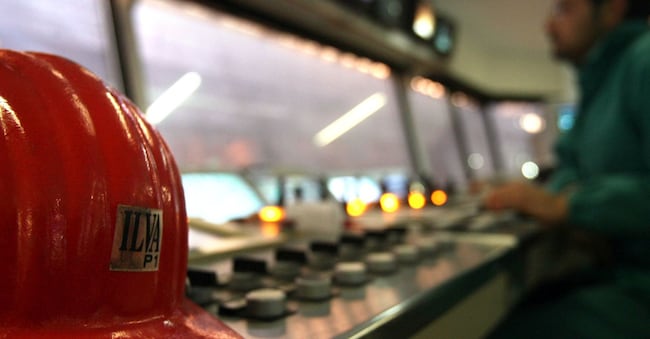
The Milan Court of Appeal has also rejected the second application to suspend the decree ordering the closure of the hot works area at the former Ilva site in Taranto. The closure of the blast furnaces by the end of October has therefore been confirmed. The new appeal had been lodged by Ilva SpA and Acciaierie d’Italia, which are under special administration, seeking to suspend the effect of the decree issued last July by the Milan Court of Appeal.
The Court confirms: “The right to health takes precedence over economic interests”
The “danger” arising from “the possible ‘shutdown’ of the blast furnaces” must give way “to the overriding right to health, with a view to striking the necessary balance between conflicting interests”. The protection of “the right to health”, in fact, is “in any event paramount, in due regard to the interpretation given at EU level, as well as to the constitutional provisions themselves”. This was stated by the Milan Court of Appeal, Commercial Division (Judges Ondei, Del Vecchio and Cortelloni), in the ruling in which it rejected the second application for a stay of proceedings filed by the lawyers representing the former Ilva and AdI, effectively confirming the July ruling on the closure of the hot section of the Taranto steelworks, to be implemented by 28 October.
On 30 September, the parties’ arguments were heard before the judges. Deputy Public Prosecutor Angelo Renna had also requested that the new application for a stay of proceedings be dismissed, following the one already rejected on 11 September. The lawyers for the former Ilva and AdI, on the other hand, had reiterated their arguments, namely the irreparable damage – they claimed – caused by the shutdown, and had requested a postponement until after the Court of Cassation’s ruling, scheduled for 20 October. Ascanio Amenduni, the lawyer representing the citizens of Taranto, had explained, however, that, as the plant was now ‘operating at minimum capacity’, there was not even any ‘irreparable harm’. According to the Court, as stated in the 12-page order, ‘the scheduling of the hearing’ by the Supreme Court changes nothing with regard to previous rulings which have emphasised the primacy of the right to health, given the harmful emissions from the plants and the presence of asbestos. Nothing changes, it states, “compared with the past in terms of the substantive protection of the interests at stake”, and the setting of that hearing is merely “a consequence of the lodging of extraordinary appeals before the Supreme Court of Cassation”.
The lawyer representing the citizens of Taranto: “Health wins out once again”
“Health once again triumphs over an economic prejudice that is increasingly seen as yielding and specious.” This is the comment by Ascanio Amenduni, the lawyer representing the citizens of Taranto who brought the civil case before the Milan Court of Appeal’s commercial division, which led to the closure of the hot zone at the former Ilva site, to be implemented by the end of October. The Milan Court of Appeal has, in fact, dismissed “the appeals lodged by Ilva Spa and Acciaierie d’Italia Spa” – both currently under special administration – which had sought “the suspension of the enforceability of the decree” issued by the Court last July.

