The interview

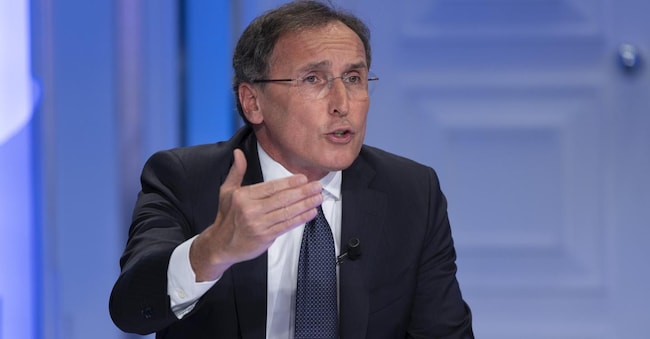
Francesco Boccia (PD): 'More revenue for the State?Thanks to the Irpef on employees and pensioners'.

The leader of the PD group in the Senate: the government's choices undermine public finances, there are no resources for the manoeuvre. Calderoli law dangerous

by Barbara Fiammeri

5' min read

5' min read

"Let's let the numbers speak, they don't lie and they don't propagandise. There is a category that is paying dearly for this government's policy. And they are first and foremost the employees, the pensioners, those who pay Irpef. That increase in revenue that is being talked about so much these days is borne by them. Just read the Mef bulletin: compared to last year, the Irpef revenue has increased by more than one point! This means that for these Italians, the tax burden has risen further. So much for paying attention to their pay envelopes...'. Francesco Boccia uses calm tones to launch the tirade. The leader of the PD group in the Senate is aiming straight at one of the battle horses of the right wing government: the reduction of the tax burden that 'is not there'. Boccia starts from the general state account that has just been approved in Palazzo Madama.

"The adjustment for 2023 had already highlighted the deterioration of our public finances. Accounts increasingly in the red, lower revenue largely determined by reduced VAT revenue and increased interest expenditure. As early as 2023, the Court of Auditors and the State General Accounting Office - fundamental guarantors and third parties in the management of the budget and the keeping of public accounts - had produced documents to denounce the negative effects of government action. Denunciation that cost dearly. Court of Auditors deprived of controls on NRP and Accountant General of the State replaced'.

Loading...

Does this refer to the appointment of Daria Perrotta as State Accountant General? .

I do not question the profile of the person appointed, but rules and numbers are not the same thing. This is the first time that a legally competent person, on the minister's staff, has become the Head of the Accountancy Office, one of the most sensitive departments of the Republic. A Head of the Legislative as well as a Head of Cabinet are chosen on the basis of a fiduciary relationship, which cannot be the one you have with a senior bureaucratic figure of this level. We have all found ourselves working with everyone. But politics, belonging, is one thing; the impartiality of the administration, which must always be guaranteed, is another. The Accountancy Office's 'no' is not a political 'no' but one of respect for accounting principles.

Back to the numbers. The last act of the Senate was the majority approval of the general accounts: what do we get out of this?

Revenue figures cast a shadow over the future. The amnesty and scrapping measures follow the logic of the 'few damned and now'. On paper, the 'rottamazione quater' would have yielded a higher result than expected, 6.8 billion against the 2.8 billion envisaged, but many of those who signed up did so in order to take out life insurance against ordinary tax collection. Result: many paid one or two instalments and then no more. And in fact, as many as 5.4 billion unpaid instalments are missing. And do you know why?

I guess the question is rhetorical...

Those who do not pay trust that the government and the right-wing majority will not fail them with another extension, another scrapping. And that is what is happening.

The government, however, also assures that it will renew the tax wedge cut: are you in favour or not?

We are so supportive that we already proposed a year ago to make it structural. But the truth is that the cut in the wedge has been absorbed by the increase in regional and municipal surtaxes and therefore no benefits have been seen in the pay packet. This is the government of announcements. Just look at what has become of the implementation of the tax delegation. They have done nothing and Giorgetti the only thing he repeats is that new resources must be found.

So you do not believe in the 'treasury', in those 10 billion that could come from the increase in revenue?

The June bulletin of the Mef indicates apparently positive data which, however, on a careful reading reveal worrying scenarios. As I said at the beginning, an analysis of the percentage composition by type of tax shows that it is only Irpef that is increasing compared to last year. Hence, it is dependent taxpayers, both private and public, who are supporting this 'treasury'.

By 20 September, the deficit reduction plan will be presented to Brussels: how much will it weigh on the manoeuvre?

We are talking about a correction of 10-12 billion. Then just to confirm what is already there, starting with the wedge cut and the reshaping of the Irpef, but also annual measures that this majority wanted, another 20 billion will be needed. But what we would like to understand is where they will get the resources to finance schools, healthcare, and assistance. At the moment we are sailing in the dark because the government - another serious anomaly - has only presented the tendential.

About health and schooling: are you really convinced that Autonomy will penalise the South? When you were in government in the post you occupy today Roberto Calderoli was not against it, now he is collecting signatures for the referendum. Have you reconsidered?

Not at all, and I remain convinced that we had taken the right path because our proposal was based on the principle of subsidiarity and it was not by chance that it was the framework law unanimously approved by all the regions and even the metropolitan cities. But above all, we immediately put resources on the table: 4.6 billion with the budget law for the equalisation fund for infrastructure, which was to reach 50 billion over 10 years.

Minister Calderoli in an interview with Gianni Trovati in yesterday's Sole 24 Ore claims that part of the resources should come from the regional spending review to 'flush out inefficiencies. What do you think?

Calderoli confirms the social dangerousness of his law. Autonomy financed by the spending of the regions is an oxymoron as well as a legal blunder. Functions instead of subjects, without resources, in any case disarticulate the regional institutions from the central state and weaken the principle of public finance coordination that the constitution assigns to the central state without hesitation. Lep and Lea are not the same thing and he still does not say where they will find the 80 to 100 billion needed to finance Lep. He then grotesquely compares his expenditure-invariance law, which is an instrumental link without resources to the budget law, to the Monti government's 2011 pension reform, which in fact was worth the entire 2012 manoeuvre and that is why the referendum was not accepted. Calderoli and the Meloni government do not take the place of the Consulta either. Their impatience with democratic counterweights is well known, but the Constitutional Court does not need Calderoli's advice.


Copyright reserved ©
Loading...

Brand connect

Loading...

Newsletter

Notizie e approfondimenti sugli avvenimenti politici, economici e finanziari.

Iscriviti