
In Buenos Aires with Borges in the places of his 'Secret Map
From Boca to Puerto Madero the soul of the barrios

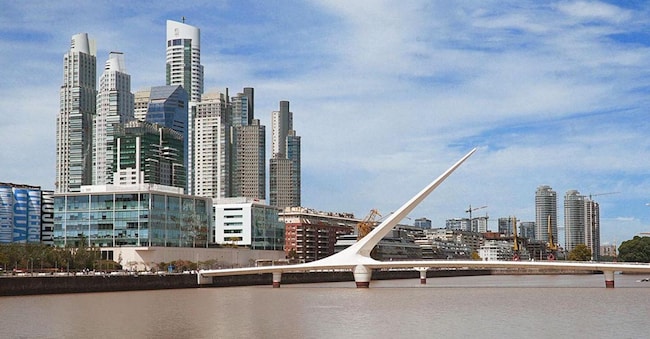
'Instead, La Boca has a different architecture; it has a carefully cultivated local colour that cannot represent the rest of the city. That is why we porteños go to Boca for tourism'. Borges would now be amazed by the success that this neighbourhood, captivated by the passion for football and the presence of the Bombonera stadium, also arouses in travellers to his city. The imprint of the Italian community, particularly the Genoese, is still very strong. The Caminito, a 150-metre-long boulevard where the houses, originally all made of sheet metal, are colourful, acts as a magnet. However, there are other attractions such as the Usina del Arte cultural and exhibition centre, the Teatro de la Ribera, which is also very lively in the colours of its façade, the Fundacion Proa, very active in promoting contemporary art talent, the lively Museo de Bellas Artes de La Boca de Artistas Argentinos Benito Quinquela Martín, the iron architecture of the old Puente Transbordador. In the barrio of Puerto Madero, on the other hand, the contemporary soul of the capital and its architecture emerges. There is the sinuous silhouette of the Puente de la Mujer, designed by Santiago Calatrava and depicting a couple during a languid grip of the tango, definitely the most admired. Then there is the building housing the Colección de Arte Amalia Lacroze de Fortabat with works by Rodin, Warhol, Turner, Dalí and the Tango Monument by sculptor Estela Trebino and engineer Alejandro Coria, which are also exciting social gathering places. Just as we like the irregular quadrilateral formed by the Darsena Norte, the green oasis formed by the Parque Micaela Bastidas and the Reserva Ecológica Costanera Sur, which is part of the Eco Ruta del Rio de la Plata, a circuit more than one hundred kilometres long that unites spaces and protected areas outside and inside the Argentine city.

