
In Buenos Aires with Borges in the places of his 'Secret Map
Plaza and Avenida de Mayo between palaces of power and modernist ethics

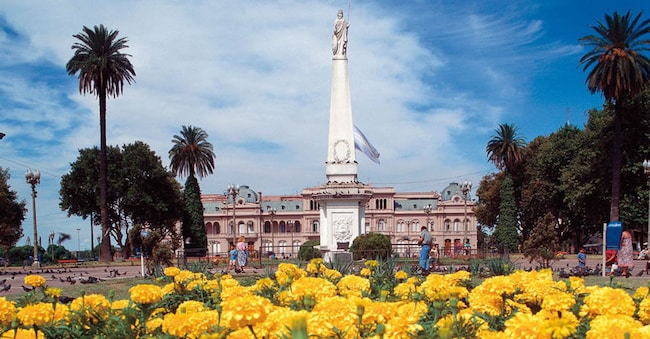
"We all know that there is no other place in Buenos Aires so saturated, so infused with history. Of history, of sensitive human time. Our Plaza de Mayo is one of the spots on the continent that has been softened and macerated by habitual hands'. The beating heart of the Argentine capital beats as loudly today as it did in the days when Jorge Luis Borges dedicated these words to it. The oldest square in Baires, from when Juan de Garay re-founded the city in 1580, is the scene of major political events: it houses the Casa Rosada, the Catedral Metropolitana and the Cabildo, and is the physical megaphone of the voices and demands for truth made by the Madres de Plaza de Mayo on the fate of their relatives who disappeared during the military dictatorship of Jorge Rafael Videla. Architecturally, the entire Avenida de Mayo that flows into this square should be crossed while keeping one's eyes up to admire the most significant buildings: Palazzo Barolo harmoniously mixes neo-Gothic and art nouveau elements with modernist construction techniques, without renouncing details reminiscent of the indigenous style. Apparently, the design is inspired by the Divine Comedy in its division into three sectors recalling Hell, Purgatory and Paradise. The Club Español is also a true witness to the beauty embodied by the Catalan modernist style that flaunts balconies, stucco, ceramics and marouflage. Moreover, dishes inspired by Catalan seafood cuisine can be enjoyed at its tables. Intriguing is undoubtedly the Iglesia San Ignacio de Loyola with its secret tunnels, some only passed through by Jesuits, who knew this network of hidden passages connected to the Cabildo and the Manzana de las Luces. Meanwhile, when the lights go down over the city, those of Rooftop Florida 165, on the terrace of the Galería Güemes, from which there is a significant view of all the domes of Buenos Aires, come on. While at the BAM Museum, made up of valuable buildings such as the Casa de los Altos de Elorriaga and the Casa de los Querubines, you can retrace the history of Baires, and the stories related to the presidents of the republic that you learn about at the Museo de Casa Rosada are palpitating. To taste the typical dish called puchero de tre carnes, a stew of chicken, beef and pork, one chooses the restaurant El Globo, just as very crowded and characteristic is the Café Los 36 billares founded in 1894: unmistakable is the noise made by the balls tumbling on the eight billiard tables and nine pool tables. Cards, chess, backgammon and dice are also played here. Although frequented by tourists, not far from the equally iconic Confiteria London City, opened in 1954, you can't pass up the chance to pay a visit to Café Tortoni, the capital's oldest, which was designed in 1898 by architect Alejandro Christophersen and, above all, has long been frequented assiduously by Julio Cortázar, Carlos Gardel and, of course, 'our' Borges.

